Likhith · December 19, 2025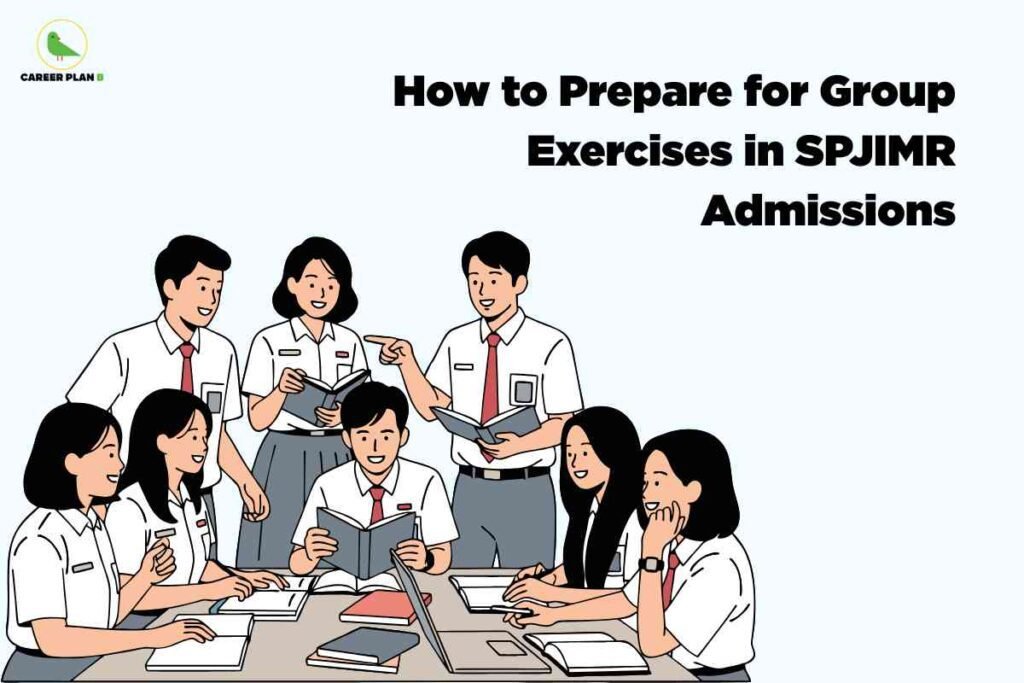
Introduction
When aspiring to join SPJIMR Mumbai’s prestigious MBA programs, it’s important to realize that your academic prowess alone won’t secure admission. One distinctive and crucial component is group exercises (GEs) during the final selection rounds. These exercises evaluate not just what you know but how you interact, lead, and collaborate under pressure.
But why do group exercises weigh so heavily at SPJIMR? Because managers need excellent interpersonal skills, the ability to work in diverse teams, and the finesse to communicate clearly and ethically. Overlooking this critical phase can jeopardize even the brightest applicants.
This detailed guide delves into what SPJIMR group exercises entail, why they’re vital, and how you can prepare to ace them—balancing confidence with humility, assertiveness with empathy.
What Are Group Exercises in SPJIMR Admissions?
SPJIMR designs group exercises to simulate real-world management scenarios where teamwork and leadership come to the fore. They typically include:
- Group Discussions (GD): Candidates discuss a business topic or case study, demonstrating communication and reasoning.
- Role Plays: Candidates act out business roles to solve problems and exhibit negotiation and conflict resolution skills.
- Collaborative Tasks: Teams work together on problem-solving exercises or case analyses to assess coordination and decisiveness.
These formats provide a window into your soft skills, emotional intelligence, and group dynamics, which test scores can’t capture effectively.
Why Are Group Exercises Crucial at SPJIMR?
SPJIMR’s mission is to develop productive, socially responsible leaders. Group exercises allow the admission panel to gauge:
- Communication Skills: Clarity, confidence, and active listening.
- Leadership Potential: Ability to steer discussions or stand aside and support.
- Teamwork Ability: Encouraging participation and balancing differing views.
- Decision-Making Under Pressure: Thinking critically and steering consensus.
- Ethics and Empathy: Respecting diverse perspectives and acting professionally.
Success in these exercises often predicts future managerial effectiveness in real workplace environments, explaining their importance in the SPJIMR selection process.
Preparation Strategies for SPJIMR Group Exercises
1. Understand the Exercise Format and Evaluation Criteria
Get acquainted with the types of group exercises used—GD, role play, and task-oriented discussions. Know that groups usually consist of 5 to 8 participants with fixed time frames (typically 20-30 minutes). Understand that scoring is holistic, focusing on participation quality, attitude, and group impact.
2. Sharpen Your Communication Skills
Practice articulating your thoughts succinctly and confidently. Use structured points and examples. Cultivate active listening by summarizing others’ ideas and building on them, which earns respect and positively influences evaluators.
3. Cultivate Leadership and Team Spirit
True leaders balance assertiveness with inclusivity. Practice steering conversations constructively without dominating. Encourage quieter members and manage conflicts diplomatically. Demonstrating ability to both lead and collaborate is key.
4. Hone Critical Thinking and Problem-solving
Approach discussions with a problem-solution mindset rather than just opinion sharing. Ask clarifying questions and suggest actionable ideas. This shows maturity and preparedness for complex business situations.
5. Engage in Mock Group Exercises
Join peer or coaching group exercises replicating SPJIMR’s format. Videos and feedback sessions help refine your verbal skills, body language, and stress management.
6. Be Sensitive to Cultural Differences and Professionalism
SPJIMR values inclusivity and ethics. Respect different backgrounds, avoid controversial topics, and maintain courteous behavior throughout.
7. Manage Nerves and Build Confidence
Develop relaxation techniques like deep breathing and visualization. View group exercises as learning experiences rather than battlegrounds—this mindset fosters natural, confident participation.
Common Pitfalls to Avoid in SPJIMR Group Exercises
- Over-talking or monopolizing discussions: Balance is essential.
- Being passive or silent: Your ideas matter—don’t hesitate to share.
- Interrupting or dismissing peers: Always show respect and patience.
- Ignoring group dynamics: Effective teamwork involves reading and reacting to the group mood.
- Losing composure under pressure: Maintain professionalism regardless of challenges.
How Career Plan B Helps
Career Plan B offers expert support tailored for SPJIMR hopefuls:
- Personalized counselling focuses on enhancing your interpersonal and leadership skills tailored for group exercises.
- Psychometric and temperament assessments provide insights into your natural strengths and areas for growth.
- Mock group exercises with professional feedback sharpen practical performance.
- Admission application and profile-building guidance helps align your whole narrative to SPJIMR’s values.
- Career roadmapping ensures your MBA journey supports long-term leadership ambitions.
Our holistic approach equips you to confidently tackle every facet of SPJIMR’s unique selection process.
Frequently Asked Questions
- What kinds of group exercises are part of SPJIMR admissions?
Group discussions, role plays, and team problem-solving tasks. - How important are group exercises compared to written tests and interviews?
Highly important—they assess soft skills critical for effective management beyond academic knowledge. - How can introverts prepare for group exercises?
Through focused communication practice, listening skills development, and confidence-building techniques. - What qualities do assessors primarily look for?
Effective communication, leadership, teamwork, ethical behavior, and decision-making skills. - How much practice is recommended?
Several mock sessions over weeks, combined with feedback and self-reflection.
Conclusion
Group exercises at SPJIMR provide a unique platform to demonstrate the interpersonal and leadership qualities that scores alone cannot capture. Strategic preparation encompassing communication, teamwork, critical thinking, and composure is essential to stand out.
For personalized coaching and tailored preparation strategies that help you master SPJIMR’s group exercises and overall processes, connect with Career Plan B. Step confidently into your management future by excelling where it counts most—in collaboration and leadership.