Likhith · September 6, 2025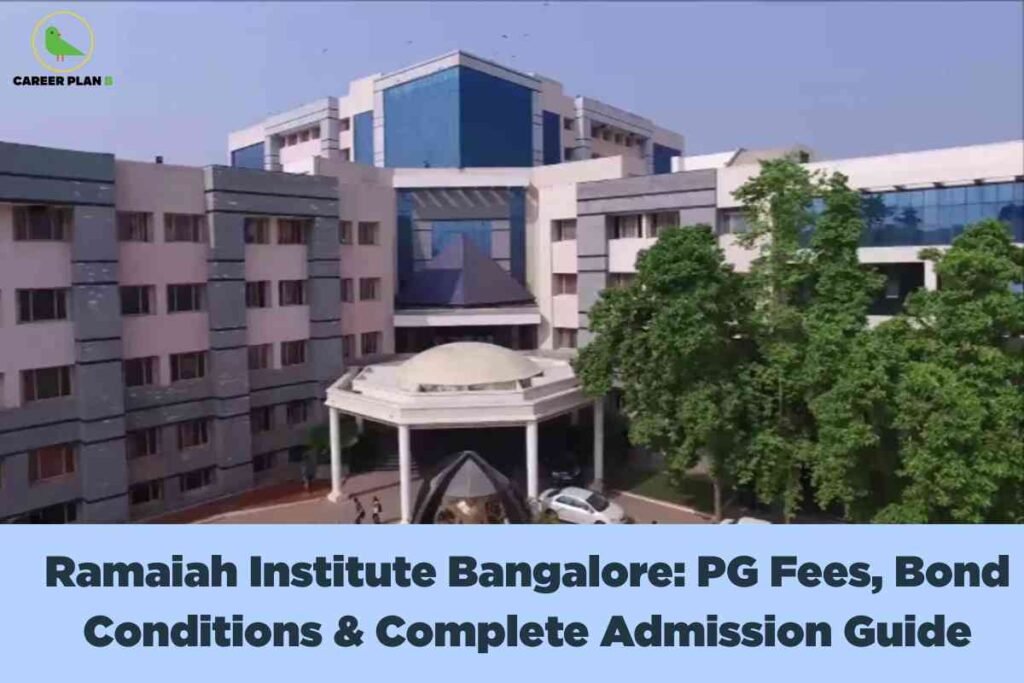
Introduction
Ramaiah Institute Bangalore, officially known as Ramaiah Medical College (RMC), stands as one of Karnataka’s most reputed private medical institutions since its founding in 1979 under the Gokula Education Foundation. Affiliated with Rajiv Gandhi University of Health Sciences (RGUHS) and recognized by the National Medical Commission (NMC), Ramaiah Institute Bangalore offers comprehensive medical programs including MBBS, MD, MS, DM, MCh, and fellowship courses.
This complete admission guide covers essential information about Ramaiah Institute Bangalore, including PG fee structures, bond conditions, admission procedures, and facilities that make this institution attractive to medical professionals seeking advanced specialization.
PG Admission Process at Ramaiah Medical College
PG admissions at Ramaiah Medical College (RMC) are conducted via NEET PG, followed by KEA (Karnataka Examinations Authority) counseling.
Key Details
Seat Distribution: Seats are allotted through KEA for both state quota and private/management/NRI categories. The exact seat split is published annually in the KEA seat matrix.
Eligibility: MBBS degree recognized by NMC, completion of internship, and valid NEET PG qualification.
Counseling: Candidates must register on the KEA portal, fill choices, and secure allotment based on rank.
Bond Requirement: State quota candidates sign a service bond (explained below).
This ensures transparency, but aspirants need to plan their choice-filling carefully depending on rank, budget, and branch preferences.
PG Fee Structure at Ramaiah Medical College (2025)
Fees vary widely depending on specialty and seat category. Below are indicative values based on recent KEA and institutional updates:
| Course Type (MD/MS) | State Quota Fees (per year) | Management/NRI Fees (per year) |
|---|---|---|
| Clinical Branches (MD Medicine, MD Pediatrics, MS Surgery, MD Radiology, MS Orthopedics, etc.) | ₹1.2 – ₹1.5 lakh | ₹25 lakh to ₹55+ lakh (Radiology/Dermatology often highest) |
| Para-Clinical (Pathology, Pharmacology, Microbiology, etc.) | ₹1.1 lakh | ₹8 – ₹15 lakh |
| Pre-Clinical (Anatomy, Biochemistry, Physiology) | ₹1.0 lakh | ₹5 – ₹8 lakh |
Additional Costs
Hostel & Mess: ₹1.25 – ₹1.75 lakh annually
University & Exam Fees: Charged separately each semester
Caution Deposit & Miscellaneous: ₹50,000 – ₹1,00,000 (refundable)
For management/NRI quota students in clinical specialties, the total budget for 3 years may exceed ₹75 lakh – ₹1.2 crore depending on the branch. Always check the official KEA fee circular for the current year.
Bond Conditions for PG Applicants
Bond obligations apply mainly to state quota seats.
Compulsory Service: Candidates allotted state quota PG seats must serve in government postings after PG.
Duration: Typically 1 year, but the 2024–25 amendments mean postings are based on available vacancies, and many candidates receive exemptions through KEA counseling.
Penalty Amount: Earlier rules cited ~₹50 lakh penalty for breaking the bond, but current enforcement is regulated by Karnataka’s Health & Family Welfare Department, and amounts may differ.
Management/NRI Seats: Generally not bound by service bonds, though confirmation at admission is recommended.
Note: Bond rules in Karnataka have been changing frequently. Aspirants should always check KEA and HFW notifications of that admission year for the latest updates.
Stipend for PG Residents at Ramaiah
As per the official stipend notification (Feb 2025), PG residents at RMC receive:
1st Year: ₹56,250 per month
2nd Year: ₹62,500 per month
3rd Year: ₹68,750 per month
This is significantly higher than earlier years and helps offset living expenses, though it remains modest compared to high tuition fees under management quota.
Clinical Training at Ramaiah Hospital
Ramaiah Hospital, with 1,380+ teaching beds and attached super-specialty services, offers robust training for PG students.
Exposure Includes:
Medicine & Allied Specialties – inpatient and OPD exposure, ICU postings
Surgical Specialties – hands-on training in OT and emergency surgery
Pediatrics & Neonatology – NICU care and pediatric emergencies
Obstetrics & Gynecology – deliveries, surgeries, and women’s health
Radiology & Diagnostics – advanced imaging and reporting skills
PG Residents Participate In:
Daily ward rounds and OPD care
Major and minor surgical procedures
Emergency and trauma duty
Case discussions and seminars
Research, publications, and academic presentations
This balance of clinical practice, academic teaching, and independent responsibilities makes Ramaiah a strong choice for PG training.
Choosing the right PG program goes beyond securing a seat—it impacts your career growth, finances, and long-term opportunities. Many students overlook critical details like bond enforcement, fee load, or stipend levels.
Career Plan B helps by:
Explaining branch prospects (high-demand vs. lifestyle-friendly choices)
Offering college comparisons across Ramaiah, KMC Manipal, St. John’s, and others
Highlighting fee, stipend, and bond variations
Providing backup pathways if preferred branches are unavailable
Guiding toward super-specialization or international career options
Instead of relying on scattered advice, you get a personalized, structured roadmap for your medical career.
Have any doubts?
📞 Contact our expert counsellor today and get all your questions answered!
FAQs
What is the PG fee for clinical branches under management quota?
Management/NRI fees for clinical branches range ₹25 lakh to ₹55+ lakh per year, depending on the specialty (Radiology and Dermatology are usually the highest).Are there compulsory bond conditions for PG students at Ramaiah?
Yes, state quota PG students are subject to Karnataka’s compulsory service rules, though 2024–25 amendments allow exemptions depending on vacancies.Do management quota students also have to serve under bond rules?
Generally, management and NRI quota students are exempt from compulsory service bonds.How much stipend do PG residents receive at Ramaiah?
Stipend is ₹56,250 (1st year), ₹62,500 (2nd year), ₹68,750 (3rd year) as per the 2025 official notification.How strong is clinical exposure at Ramaiah compared to other private colleges?
Very strong—thanks to a large teaching hospital (1,380 beds), diverse patient inflow, and multiple super-specialties.What are the most popular PG branches at Ramaiah?
MD Radiology, MD Medicine, MD Pediatrics, MS Orthopedics, and MD Dermatology are highly preferred.How does Ramaiah compare with other Karnataka private PG colleges?
Ramaiah offers excellent infrastructure and exposure, though management fees are among the highest compared to colleges like St. John’s or KMC Manipal.
Conclusion
Ramaiah Institute Bangalore represents an excellent choice for medical professionals seeking quality postgraduate education with strong clinical exposure and research opportunities. Students who choose this institution benefit from comprehensive infrastructure, experienced faculty, and a global alumni network that spans across India and international healthcare systems. The combination of reasonable fees, structured bond conditions, and exceptional clinical training makes Ramaiah Institute Bangalore a strategic choice for medical career advancement. Consider this institution seriously if you prioritize clinical diversity, research opportunities, and long-term career growth in medical specialties.