Piyush · March 31, 2026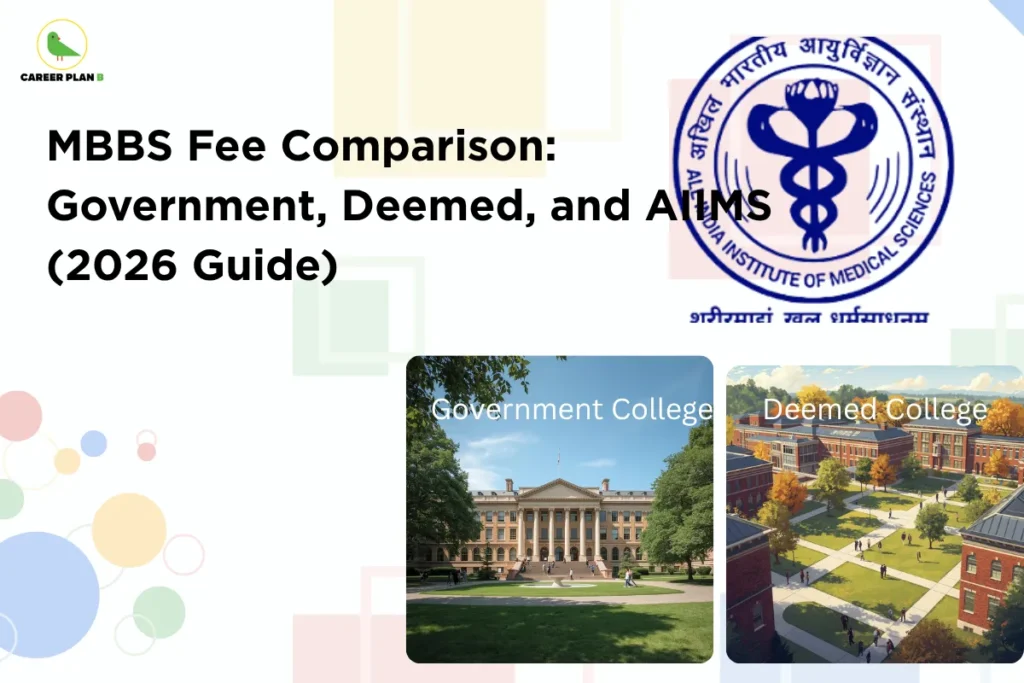
Introduction
After months of intense preparation, the NEET results are finally out. But as the celebration fades, a new, more practical challenge arises: How much is this going to cost? For most Indian families, choosing a medical college isn’t just about the “rank”—it’s a major financial decision.
The gap between the most affordable and the most expensive medical seats in India is staggering. While some students complete their entire 5.5-year degree for less than the cost of a high-end smartphone, others may invest upwards of ₹1.5 crore. This blog will break down the fee structures of AIIMS, Government Medical Colleges (GMC), and Deemed Universities for the 2026 session to help you navigate the counselling process with clarity.
AIIMS: The Gold Standard of Affordability
If you manage to secure a seat at an All India Institute of Medical Sciences (AIIMS), you’ve essentially won the “educational lottery”. AIIMS institutions are centrally funded, meaning the government heavily subsidises every student’s education.
Why is AIIMS the most affordable option in India? The fees here are almost symbolic. For AIIMS New Delhi, the total academic fee for the entire 5.5-year course is approximately ₹6,000 to ₹7,000. When you add one-time registration fees, laboratory charges, and student union funds, the cost remains incredibly low.
- Tuition Fee: ~₹1,350 per year
- Hostel Rent: ~₹990 per year
- Total 5-Year Estimate: ₹15,000 – ₹25,000 (excluding mess charges)
Even at newer AIIMS branches like AIIMS Rishikesh or AIIMS Jodhpur, the fee structure remains uniform and nominal, making it the most budget-friendly path to becoming a doctor.
Confused about your next steps? Get a personalized roadmap tailored to your career goals.
Government Medical Colleges (GMC): State-Wise Variations
Government Medical Colleges are the backbone of medical education in India. While they are affordable, their fees are not as uniform as AIIMS. The cost often depends on whether you enter through the All India Quota (AIQ) or the State Quota.
How much do State Government colleges actually cost?
On average, annual tuition fees in a GMC range from ₹20,000 to ₹1,50,000. However, some states are outliers. For instance, Maulana Azad Medical College (MAMC) in Delhi is famous for its low fees (around ₹15,000 total), while government colleges in states like Rajasthan or Gujarat might have slightly higher semi-subsidised rates.
| Institution Type | Average Annual Tuition Fee | 5.5 Year Total (Approx.) |
|---|---|---|
| Top GMCs (Delhi/MH) | ₹10,000 – ₹50,000 | ₹50,000 – ₹3 Lakh |
| Standard State GMCs | ₹50,000 – ₹1,20,000 | ₹3 Lakh – ₹7 Lakh |
| Semi-Govt / Aided | ₹2,00,000 – ₹60,00,000 | ₹10 Lakh – ₹30 Lakh |
Deemed Universities: The Premium Choice
For students who have a qualifying NEET score but fall short of the high cut-offs for government seats, Deemed Universities offer a reliable alternative—at a premium price. These institutions are autonomous and set their own fee structures.
Are Deemed Universities worth the high price tag?
Fees in Deemed Universities generally range from ₹15 Lakh to ₹30 Lakh per year. By the time a student completes their internship, the total investment often crosses the ₹1 Crore mark.
- Top-Tier (e.g., KMC Manipal): Fees are around ₹18–22 Lakh per year.
- High-End (e.g., DY Patil or SRM): Fees can reach ₹25–30 Lakh per year.
- Annual Hikes: Many Deemed Universities have a “stipulated increase” clause, where tuition fees increase by 5–10% every year.
While the cost is high, these colleges offer world-class infrastructure, advanced simulation labs, and a higher chance of admission for mid-range NEET scorers.
Hidden Costs You Must Factor In
When planning your budget, don’t just look at the tuition fee. Several “extra” costs can add up quickly:
- Hostel & Mess Charges: In government colleges, this is usually ₹5,000–₹10,000 per month. In Deemed Universities, premium hostels can cost ₹2 Lakh–₹4 Lakh annually.
- University & Exam Fees: Often charged separately every semester.
- The “Bond Penalty”: Many government colleges require you to serve the state for 1–2 years after graduation. If you break this bond to pursue private practice or go abroad, penalties can range from ₹10 Lakh to ₹50 Lakh.
How Career Plan B Helps
Navigating the complex maze of fee structures and counselling rounds can be overwhelming.
Career Plan B provides expert support through Personalized Career Counselling and Admission & Academic Profile Guidance.
We help families create a strategic Career Roadmap, ensuring you find the best medical college that fits both your NEET rank and your financial budget.
For Latest Information
FAQ Section
- Is the security deposit for NEET counselling refundable?
Yes, the security deposit (e.g., ₹2 Lakh for Deemed Universities) is refundable if you are not allotted a seat or if you join the allotted college. However, it is forfeited if you exit in certain rounds without following MCC rules.
- Do AIIMS colleges have a service bond?
Currently, most AIIMS institutions do not have a mandatory rural service bond, unlike many state government medical colleges.
- Can I get a bank loan for Deemed Universities?
Yes, most major banks provide education loans for MBBS in Deemed Universities, though they may require collateral for high amounts exceeding ₹7.5 Lakh.
- Are fees the same for NRI candidates?
No. NRI quota seats in Deemed and some Government colleges have much higher fees, usually denominated in US Dollars ($25,000–$50,000 per year).
Conclusion
Choosing between AIIMS, a GMC, or a Deemed University is a balance between Merit and Money. If your rank allows, AIIMS and GMCs offer the best return on investment. However, if you have the financial means, Deemed Universities provide an excellent pathway to a medical career without the intense “rank pressure” of government seats.