Piyush · March 31, 2026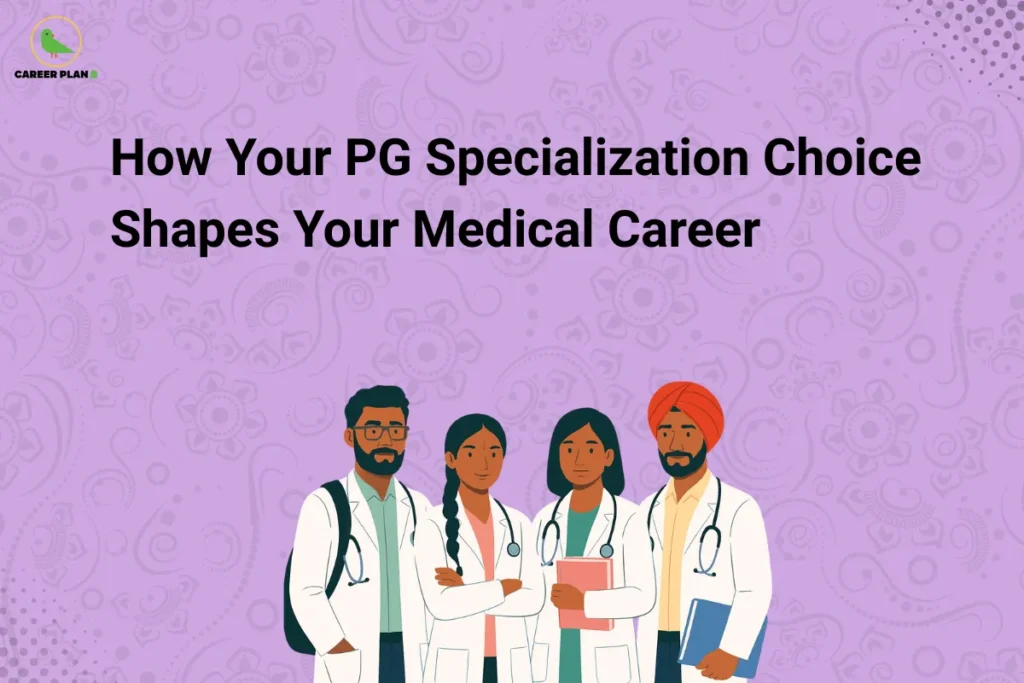
Introduction
You’ve survived years of gruelling MBBS lectures, clinical rotations, and sleepless nights. Now comes a decision that may matter even more than your final-year exams — choosing your PG specialization.
For many medical students, this choice feels overwhelming. Should you go for a high-demand surgical branch? A stable non-clinical path? Or follow what genuinely excites you? The truth is, your PG specialization choice in medical career planning isn’t just an academic decision — it’s a life decision. It shapes your daily work, your income, your lifestyle, and ultimately, the kind of doctor you become.
In this blog, we’ll walk you through why this choice matters so deeply and how to make it wisely.
Why PG Specialization Is More Than Just a Subject Choice
Think of your MBBS as learning to drive. Your PG specialization is choosing which road to drive on — for the next 30 years.
Each speciality comes with its own world. A radiologist works in controlled, tech-driven environments. A surgeon thrives on high-pressure, hands-on intervention. A psychiatrist builds deep, long-term relationships with patients. These aren’t just different subjects — they’re different lifestyles, different identities, and different career trajectories altogether.
Your doctor career path post-PG also determines your access to fellowship programmes, academic roles, hospital appointments, and even opportunities abroad. Choosing without self-awareness can mean years of misalignment — doing work that doesn’t suit your strengths or satisfy your ambitions.
Confused about your next steps? Get a personalized roadmap tailored to your career goals.
Key Factors to Consider When Choosing a Medical Specialization
Your Aptitude and Interests
This sounds obvious, but it’s the most ignored factor. Many students chase “top branches” without asking, “Am I actually good at this?” Do I enjoy it?
Reflect on your clinical rotations. Which ward did you look forward to visiting? Which cases made you want to dig deeper? Your natural curiosity is a reliable compass. Pairing interest with medical student career guidance early can help you validate these instincts before committing.
Career Scope and Job Market Demand
Some specializations offer wider opportunities than others, especially in India’s evolving healthcare landscape. Fields like dermatology, radiology, anaesthesia, and orthopaedics continue to see high demand. Meanwhile, newer areas like sports medicine, palliative care, and clinical research are growing steadily.
Don’t just look at what’s popular today — look at where healthcare is heading over the next decade.
Work-Life Balance by Specialty
This matters more than most students admit during MBBS. Surgical branches typically involve unpredictable hours and on-call duties. Non-clinical or diagnostic specialties often offer more structured schedules.
If family time, mental health, or pursuing parallel interests are important to you, factor lifestyle into your medical career planning after MBBS. There’s no wrong answer here — only an honest one.
MD vs MS — Which Path Fits You?
This is one of the most common dilemmas. MD (Doctor of Medicine) covers medical specialties such as internal medicine, paediatrics, and psychiatry. MS (Master of Surgery) is for surgical disciplines like general surgery, ENT, and ophthalmology.
Beyond content, consider your temperament. Are you patient, analytical, and drawn to long-term management? MD may suit you. Do you prefer immediate, tangible results through procedures? MS could be your fit. Understanding this distinction early is key to smart NEET PG preparation and branch selection.
Common Mistakes Medical Students Make When Choosing a Specialization
Chasing Trends Instead of Strengths
Every few years, a “hot” speciality emerges. Students rush toward it not because of genuine interest but because of perceived prestige or earning potential. The problem? A speciality you don’t connect with becomes a career you endure rather than enjoy.
Letting External Pressure Decide
Parents, peers, and seniors all have opinions. While guidance is valuable, the final choice must be yours. Your specialization will define your day-to-day reality, not theirs.
Delaying the Decision Until It’s Urgent
Many students avoid thinking about the best medical specializations in India until after NEET PG results. By then, the decision is rushed and reactive. Starting the reflection process in your final MBBS years gives you time to explore, ask questions, and consult mentors.
How Career Plan B Helps
Choosing a PG specialization is one of the biggest decisions of your medical journey, and you don’t have to make it alone.
Career Plan B provides
- Personalized career counselling
- Psycheintel and career assessment tests
- Admission and academic profile guidance
- Detailed career roadmapping
tailored for medical students. Whether you’re confused between MD and MS, or exploring residency and fellowship options, Career Plan B helps you choose with clarity and confidence.
For Latest Information
Frequently Asked Questions
Q1. When should I start thinking about my PG specialization?
Ideally, begin reflecting during your third or final year of MBBS. Early exploration gives you time to align your preparation and choices without last-minute pressure.
Q2. Is it okay to choose a non-clinical speciality like radiology or pathology?
Absolutely. Non-clinical specialties offer excellent career prospects, better work-life balance, and growing demand in India’s healthcare system. The key is choosing based on genuine fit, not stigma.
Q3. How does NEET PG rank affect my specialization choice?
Your rank determines which specializations and colleges you can access. However, a lower rank doesn’t mean a lesser career — many students build outstanding careers in less competitive branches by excelling within them.
Q4. Can I change my specialization after PG?
Switching after PG is difficult but not impossible. Super-specialization (DM/MCh) or fellowship programmes can sometimes redirect your focus. That said, it’s far better to choose thoughtfully the first time.
Conclusion
Your PG specialization is not just a box to tick on a form; it’s the foundation of your entire medical career. The doctors who thrive long-term are rarely those who chased ranks or trends. They’re the ones who chose a path that matched who they are.
Take the time to reflect, seek guidance, and make this decision with intention. Your future patients and your future self will thank you for it.