Geetansh · April 7, 2026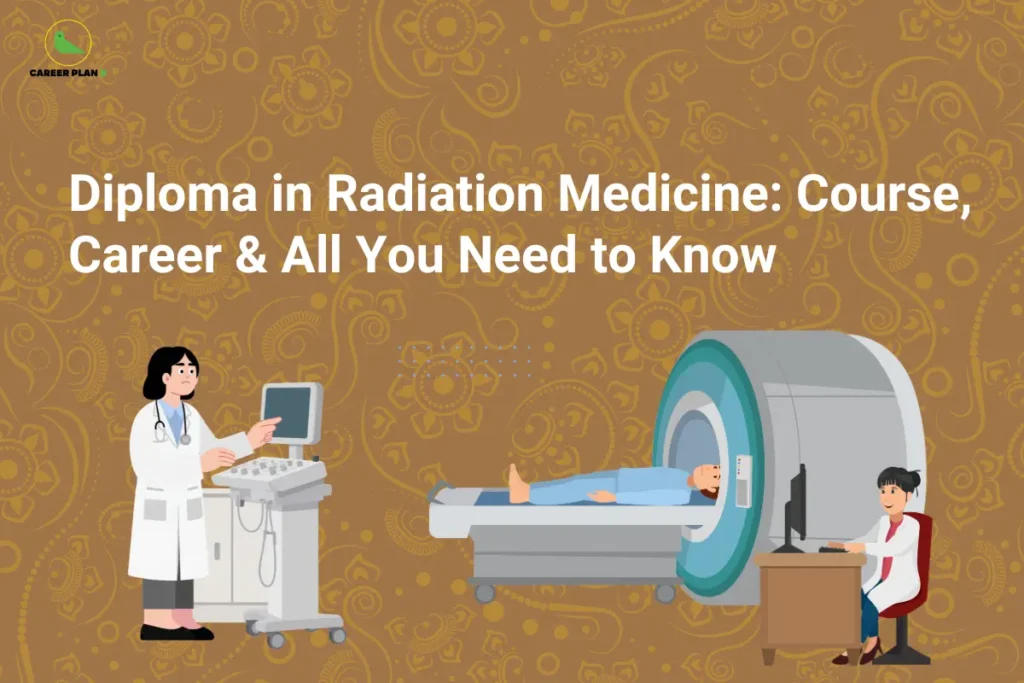
Introduction
India is facing a growing shortage of trained radiology and imaging professionals. With cancer cases rising and diagnostic imaging becoming central to modern medicine, the demand for skilled radiation technologists has never been higher. Yet most students are unaware that a Diploma in Radiation Medicine can open doors to a stable, respected, and rewarding healthcare career — often in just two years after Class 12.
If you are a science student wondering what to do after 10+2 or a parent trying to map out practical career paths in healthcare, this guide is for you. We will walk you through everything — what the course covers, who is eligible, how admission works, which entrance exams matter, what the syllabus looks like, and where the career can take you.
What Is a Diploma in Radiation Medicine?
A Diploma in Radiation Medicine — also known as a Diploma in Radiography or Diploma in Medical Radiation Technology — is a paramedical programme that trains students in the use of radiation-based imaging and therapeutic techniques. It typically runs for two to two-and-a-half years, including a clinical internship component.
Students learn to operate equipment such as X-ray machines, CT scanners, MRI systems, and fluoroscopy units. They also receive foundational training in radiation safety, patient care, and anatomy.
It is important to understand the difference between this diploma and a B.Sc in Radiography. The B.Sc is a three-to-four-year undergraduate degree offering more in-depth theoretical knowledge and better prospects for academic progression. The diploma is shorter, more hands-on, and ideal for students who want to enter the workforce quickly. Both are valid pathways — the right one depends on your goals.
Confused about your next steps? Get a personalized roadmap tailored to your career goals.
Why Choose Radiation Medicine as a Career?
The healthcare sector in India is growing at a rapid pace. Hospitals, diagnostic chains, and cancer treatment centres are expanding into tier-2 and tier-3 cities, creating a huge demand for trained paramedical staff. Radiation technologists sit at the heart of this expansion.
40%+
Projected growth in demand for radiographers and imaging technicians in India over the next decade, driven by cancer diagnostics, trauma care, and preventive health check-ups.
Beyond job availability, this career offers something rare in entry-level healthcare roles — direct patient impact. Every scan a radiation technologist conducts helps a doctor make a life-changing diagnosis. That sense of purpose, combined with reasonable salaries and clear career progression, makes this one of the more compelling radiation therapy courses in India for science students.
Is radiation medicine a good career in India?
Yes — and here is why. The government’s push under Ayushman Bharat and other national health schemes has led to rapid infrastructure growth in public hospitals. Private diagnostic chains like Metropolis, SRL, and Dr Lal PathLabs are expanding fast. Both sectors actively hire trained radiographers. Additionally, roles in this field are largely recession-proof. People need scans regardless of economic cycles.
Eligibility Criteria for Diploma in Radiation Medicine
Before applying, make sure you meet the standard radiography eligibility criteria. While these can vary slightly between institutions, the following requirements apply to most programmes across India:
- Educational qualification: Completion of Class 12 (10+2) from a recognised board with Physics, Chemistry, and Biology as core subjects
- Minimum aggregate marks: Most institutions require 45–50% aggregate in PCB; some top colleges set the bar at 55–60%
- Age: Generally 17 to 25 years at the time of admission; age relaxation may apply for reserved categories
- Medical fitness: Some colleges require a basic fitness certificate, given the nature of clinical work
Students who have passed Class 12 with PCM (Physics, Chemistry, and Mathematics) instead of Biology may be eligible at select institutions — it is always advisable to verify this directly with the college.
Admission Process — How Do You Get In?
The diploma in radiography admission process in India follows two main routes: merit-based and entrance exam-based.
In merit-based admissions, your Class 12 PCB aggregate determines whether you get a seat. Many state government colleges and private institutions follow this route. Applications are typically submitted online through the college or state paramedical council portal, after which merit lists are released in rounds.
In entrance exam-based admissions, you must qualify a written test before your marks are considered for counselling. Some central institutions like AIIMS and JIPMER conduct their own exams, while several states have centralised paramedical entrance tests.
Top colleges offering this diploma in India
| Institution | Type | Location | Official Admission Portal |
| AIIMS New Delhi | Government | New Delhi | aiimsexams.ac.in |
| JIPMER | Government | Puducherry | jipmer.edu.in |
| Christian Medical College (CMC) | Private Aided | Vellore, Tamil Nadu | admissions.cmcvellore.ac.in |
| Manipal College of Health Professions | Private | Manipal, Karnataka | manipal.edu/soahs-manipal |
| PGIMER | Government | Chandigarh | pgimer.edu.in |
| Sri Ramachandra University (SRIHER) | Private | Chennai, Tamil Nadu | admissions.sriramachandra.edu.in |
Entrance Exams for Diploma in Radiation Medicine
If you are targeting government or autonomous institutions, knowing the relevant entrance exams is essential. Here is a quick overview of the key entrance exams for radiation medicine programmes:
| Exam | Conducted By | Level | Mode |
| AIIMS Paramedical Entrance | AIIMS New Delhi | National | Computer-based |
| JIPMER Allied Health Sciences Exam | JIPMER | National | Computer-based |
| State Paramedical Council Exams | Respective State Boards | State | Offline / Online (varies) |
| University-Level Entrance Tests | Individual Universities | Institution | Varies |
Most entrance exams for this diploma test candidates on Physics, Chemistry, Biology, and General Knowledge. Preparing well with NCERT Class 11 and 12 textbooks is a strong starting point. Check individual exam notifications carefully, as dates and patterns change each year.
Diploma in Radiation Medicine Syllabus
The syllabus is a blend of theoretical subjects and hands-on clinical training. Here is a general year-wise breakdown that applies to most institutions offering this medical imaging diploma:
| Year | Core Subjects |
| Year 1 | Human Anatomy, Physiology, Radiographic Physics, Principles of Radiography, Radiation Protection and Safety, Pathology Basics, Hospital Management |
| Year 2 | Radiographic Techniques (chest, abdomen, limbs), Contrast Radiography, Darkroom Techniques, CT and MRI Basics, Ultrasound Principles, Clinical Internship (hospital rotation) |
The clinical internship is not optional — it is a mandatory component that places students in radiology departments of affiliated hospitals. This is where textbook knowledge transforms into real clinical competence. Students learn to position patients, operate imaging equipment, and follow radiation safety protocols under supervision.
Career Scope After Diploma in Radiation Medicine
This is where things get genuinely exciting. The radiation medicine career scope in India is wide and growing. Graduates are not limited to one job role or one type of employer.
Common job roles for diploma holders include Radiographer, X-Ray Technician, CT Technologist, MRI Technician, Radiation Therapy Assistant, and Ultrasound Technician. These roles are available across a broad range of settings — government hospitals, private hospitals, diagnostic imaging chains, cancer treatment centres, armed forces medical services, and even international healthcare organisations.
Salary expectations after this diploma
Entry-level radiographers in India typically earn between ₹15,000 and ₹25,000 per month in their first role. With three to five years of experience, especially in specialised imaging like MRI or CT, salaries can rise to ₹35,000–₹55,000 per month. Government sector positions come with additional benefits such as job security, allowances, and pensions. Radiographer job opportunities in metro cities and corporate hospital chains tend to offer higher compensation.
Can you pursue higher studies after this diploma?
Absolutely — and this is one of the underrated strengths of the Diploma in Radiation Medicine. After completing this programme, you can:
- Pursue a B.Sc in Radiography or Medical Imaging Technology through lateral entry at several universities
- Enrol in a Postgraduate Diploma in specialised areas like CT, MRI, or Nuclear Medicine
- Appear for government recruitment exams (SSC, state paramedical boards) to secure a stable public sector position
- Consider international certifications (such as ARRT in the USA) for those interested in working abroad
The diploma is a launchpad, not a ceiling. Many successful radiologists and imaging specialists started their journey exactly here.
How Career Plan B Helps
Choosing the right paramedical course can be overwhelming.
Career Plan B offers personalised career counselling, Psycheintel-powered career assessments, and structured admission guidance to help you identify whether a Diploma in Radiation Medicine aligns with your strengths and goals.
From building your academic profile to mapping a long-term career roadmap in healthcare, Career Plan B is your trusted partner at every step.
For Latest Information
Frequently Asked Questions
- Is the Diploma in Radiation Medicine recognised by the government?
Yes, when offered by institutions affiliated with recognised universities or state paramedical councils, the diploma is officially recognised. Always verify affiliation before applying to any private institution.
- Can I do a Diploma in Radiation Medicine after completing Commerce or Arts in Class 12?
No. Most institutions require a science background with Physics, Chemistry, and Biology. Students from non-science streams are generally not eligible for this course.
- What is the approximate fee for a Diploma in Radiation Medicine?
Fees vary widely. Government institutions may charge as little as ₹10,000–₹30,000 per year. Private colleges can charge between ₹50,000 and ₹1.5 lakh per year. Always factor in hostel and clinical training costs.
- Is there any scope for working abroad after this diploma?
Yes, especially in countries like the UAE, Saudi Arabia, Canada, and Australia, which actively recruit trained radiographers. However, you may need to clear additional country-specific licensing exams and demonstrate clinical experience.
- How is a Diploma in Radiation Medicine different from a Diploma in Radiotherapy?
Radiation Medicine broadly covers diagnostic imaging (X-ray, MRI, and CT). Radiotherapy specifically focuses on using radiation for cancer treatment. Both are related but serve different clinical functions. Your career interests should guide your choice between the two.
- Do I need to complete an internship as part of this diploma?
Yes. Clinical internship is a mandatory component of most Diploma in Radiation Medicine programmes. It typically lasts six months to one year and must be completed at an affiliated hospital or radiology centre.
Conclusion
A Diploma in Radiation Medicine is one of those career paths that quietly offers enormous value — steady demand, clear skill development, real patient impact, and a genuine pathway for growth. Whether you want to start working quickly after Class 12, or use this diploma as a stepping stone towards a B.Sc or a specialised postgraduate qualification, this course has the flexibility to serve both goals.
The key is to make an informed decision—one that accounts for your academic strengths, the right institution, the admission process, and your long-term professional aspirations.
Not sure if this is the right course for you?
Take a Career Plan B assessment today and get personalised guidance. Your roadmap to meaningful healthcare starts with one honest conversation.