Martha Divakar · February 21, 2026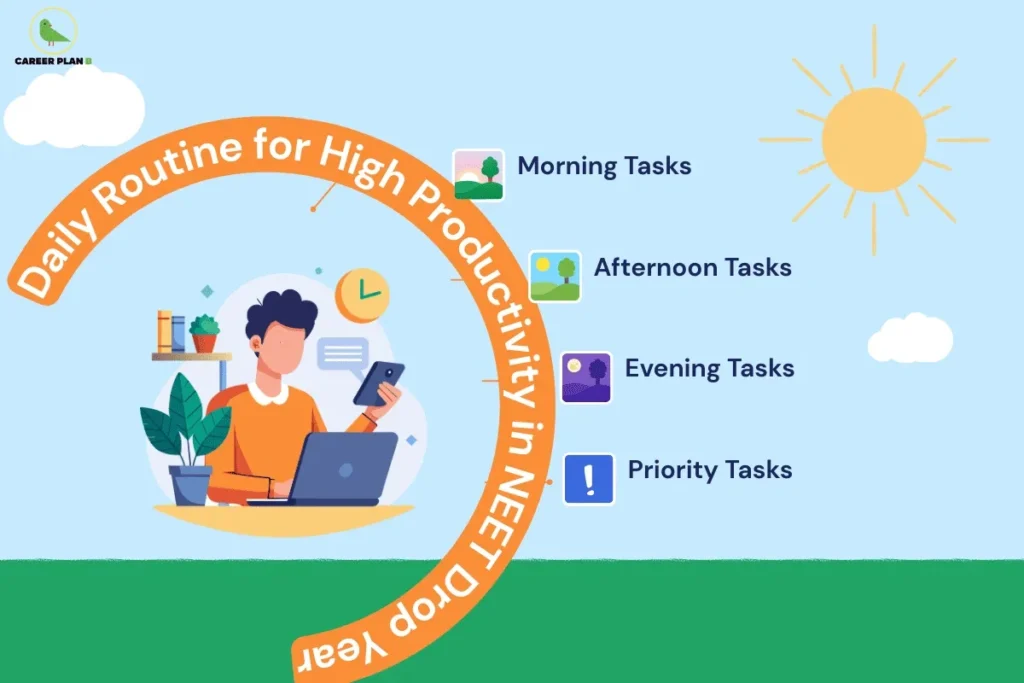
Introduction
The daily routine for NEET drop year is one of the most powerful tools to turn a repeat year into a success story. Many students who take a drop year for NEET feel overwhelmed by the freedom; no school and no fixed schedule can lead to procrastination, distractions, or burnout. Yet, a well-planned routine builds discipline, sharpens focus, and maximizes retention in this high-stakes exam.
NEET remains intensely competitive. In recent years, over 22 lakh candidates appeared. With questions heavily based on the NCERT curriculum, especially in Biology, where direct lines and concepts often appear, a structured approach emphasizing quality study, revision, and practice is essential.
This blog outlines a realistic, high-productivity daily routine for the NEET drop year, proven principles from successful repeaters, subject-wise focus, and practical habits to help you aim for NEET 2026 success while staying healthy and motivated.
Why a Structured Daily Routine Matters in a NEET Drop Year
Without classes or assignments, a drop year offers complete flexibility, but that same freedom often becomes the biggest challenge. Many droppers waste early months on irregular study, only to rush later and feel stressed.
A solid NEET dropper timetable creates structure:
- Builds consistency for better long-term retention.
- Helps track progress and fix weak areas early through error analysis.
- Prevents burnout by including built-in breaks, sleep, and physical activity.
- Turns overwhelming syllabus coverage into daily achievable goals.
Droppers who succeed often credit routine for their improved scores, turning previous mistakes into strengths.
Key Principles for a Productive NEET Dropper Timetable
To make your routine effective, follow these core rules grounded in the exam’s nature:
- Prioritize NCERT: As the syllabus draws heavily from NCERT textbooks for Classes 11 and 12. Biology questions frequently come straight from NCERT lines, diagrams, and examples.
- Quality over quantity: Aim for 10–12 hours of focused, effective study rather than 14+ hours of low-concentration effort.
- Balance subjects: Biology deserves daily attention (around 40–50% weightage in questions), while Physics and Chemistry can alternate for deeper practice.
- Incorporate active recall and testing: Daily revision + MCQ practice + weekly full-length mock tests.
- Include rest and health: 7–8 hours of sleep, short exercise, and meals to sustain energy and avoid fatigue.
- Track and adjust: Weekly review weak topics via error logs from mocks/PYQs.
These align with the exam pattern: 200 questions (180 to attempt), 720 marks, covering Physics, Chemistry, and Biology (Botany + Zoology).
Sample Daily Routine for High Productivity in NEET Drop Year
Here’s a balanced, realistic timetable for most droppers. Adjust wake-up time based on your natural rhythm (e.g., shift 30–60 minutes if you’re not a morning person). The goal is consistency and deep focus.
| Time Slot | Activity | Focus/Tips |
|---|---|---|
| 5:30 AM – 6:00 AM | Wake up, freshen up, light exercise/stretch | Hydrate and do a quick walk or yoga to boost alertness. |
| 6:00 AM – 8:00 AM | Biology NCERT reading + quick revision | Read 1–2 chapters actively; focus on diagrams. |
| 8:00 AM – 8:30 AM | Breakfast + short break | Nutritious meal; avoid heavy carbs. |
| 8:30 AM – 11:00 AM | Physics / Chemistry deep study block | Alternate days; solve 50–80 MCQs. |
| 11:00 AM – 11:15 AM | Short break | Stretch, hydrate, no phone. |
| 11:15 AM – 1:30 PM | Biology practice + MCQs | Solve topic-wise questions and review mistakes. |
| 1:30 PM – 2:30 PM | Lunch + rest | Balanced meal + short power nap. |
| 2:30 PM – 5:00 PM | Second deep block (alternate subject) | Continue weak topics; practice PYQs. |
| 5:00 PM – 5:30 PM | Break + light exercise | Walk outdoors and recharge. |
| 5:30 PM – 8:00 PM | Revision + error analysis + MCQs | Revise notes and solve 100+ questions. |
| 8:00 PM – 9:00 PM | Dinner + unwind | Light meal and disconnect. |
| 9:00 PM – 10:30 PM | Light revision / weak areas | Flashcards, formulas, diagrams. |
| 10:30 PM – 11:00 PM | Wind down, plan next day | Journal progress and set priorities. |
| 11:00 PM | Sleep | Ensure 7–8 hours for memory consolidation. |
Once a week (e.g., Sunday), do a full 3-hour mock test + detailed analysis.
Subject-Wise Focus in Your Daily NEET 2026 Preparation Routine
- Biology: Daily must. Read NCERT line-by-line, practice diagrams, and solve 100+ MCQs. It often decides ranks.
- Physics: Focus on conceptual clarity first (formula derivation), then numerical practice. Alternate heavy days.
- Chemistry: Organic/Inorganic: reactions + exceptions from NCERT. Physical: formula application + calculations.
- Weekly elements: Full syllabus revision cycles, past year questions (PYQs), and 1–2 full mocks. Analyze every mistake.
Essential Productivity Habits and Tips for NEET Repeaters
- Use Pomodoro (25–50 min study + 5–10 min break) for sustained focus.
- Limit phone/social media; use apps to block distractions during study blocks.
- Set weekly goals (e.g., finish 3 chapters + 500 MCQs) and track them in a journal.
- Stay healthy: Hydrate, eat brain-boosting foods (nuts, fruits), and exercise 30 min daily.
- Avoid comparison; focus on your progress.
How Career Plan B Helps
A drop year can feel isolating if motivation dips or planning feels off-track.
Career Plan B provides personalized career counselling to clarify goals,
Psycheintel and Career Assessment Tests to identify strengths/weaknesses, admission and academic profile guidance, and career roadmapping.
These services help droppers stay focused, reduce anxiety, and build a confident path toward NEET or balanced alternatives.
Have any doubts?
📞 Contact our expert counsellor today and get all your questions answered!
FAQs
- How many hours should I study daily in a NEET drop year?
Aim for 10–12 focused hours.
- Is joining coaching necessary for droppers?
Not always. Many succeed with self-study using NCERT + online resources/PYQs. Coaching helps if you need structure or doubt resolution.
- How to avoid burnout in a drop year?
Stick to breaks, sleep 7–8 hours, exercise, and take one light day weekly. Monitor mental health and talk to family or seek guidance if overwhelmed.
- Can droppers crack NEET with self-study?
Yes, many toppers do by following disciplined routines, focusing on NCERT, and regular practice.
Conclusion
A purposeful daily routine for NEET drop year transforms pressure into progress. By prioritizing NCERT, balancing subjects, practicing consistently, and protecting your health, you set the foundation for a strong NEET 2026 performance. Start small today and implement this timetable, track your first week, and adjust as needed.
Your drop year isn’t a setback; it’s your dedicated time to shine. Take the first step now, stay consistent, and watch the results follow. If you need extra support in planning or motivation, professional guidance can make the journey smoother.