Likhith · December 10, 2025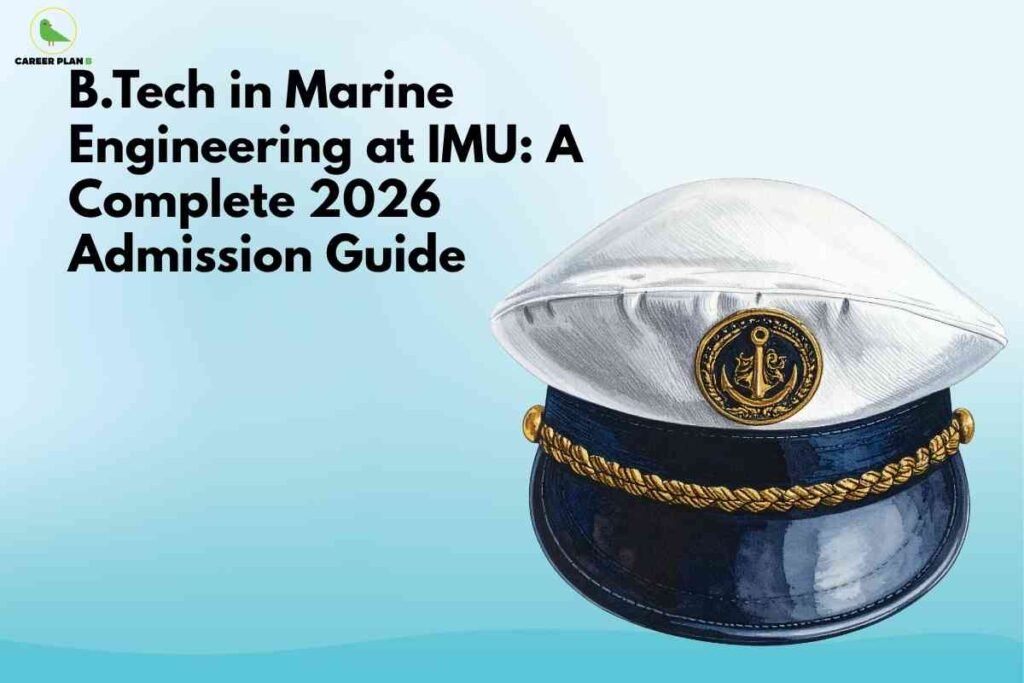
Introduction
Imagine mastering ship propulsion systems by day and navigating ocean horizons by night. As a marine engineer, you ensure every vessel’s engines, auxiliary machinery, and safety systems operate flawlessly across global routes. The Indian Maritime University (IMU), a central university under the Ministry of Ports, Shipping & Waterways offers a four-year residential B.Tech Marine Engineering programme aligned with STCW conventions. Ranked No. 1 among maritime universities in India, IMU equips cadets with rigorous academics, mandatory pre-sea training, and essential sea-time to qualify as certified Marine Engineer Officers. This guide breaks down eligibility criteria, IMU CET admission, curriculum highlights, training modules, fee details, and career pathways to help you chart your course for 2026.
Eligibility & Entrance Exam (IMU CET)
Candidates for IMU’s B.Tech Marine Engineering must meet academic, age, and medical standards:
- Academic Qualification
– 12th Grade with Physics, Chemistry, Mathematics, and at least 60% aggregate (55% for SC/ST or specified island natives)
– Diploma holders (Marine/Mechanical/Electrical) with 55% aggregate may apply via lateral entry - Age Limits (as of 01.08.2026)
– Male: General ≤ 25 years, OBC ≤ 28 years, SC/ST ≤ 30 years
– Female: General ≤ 27 years, OBC ≤ 30 years, SC/ST ≤ 32 years - Medical & Physical Standards
– Vision: Distant unaided 6/12 (each eye) or 6/9 (better eye), 6/18 (other eye); full field of vision; normal colour vision (Ishihara test)
– Hearing: Adequate for machinery operation and alarms
– General fitness as per Merchant Shipping (Medical Examination) Rules, 2000 - Entrance Exam: IMU Common Entrance Test (IMU CET) for B.Tech Marine Engineering
– Register online on IMU portal by advertised deadlines
– Appear for IMU CET and secure rank within allotted seats
Official source: https://www.imu.edu.in/imunew/course-programs?course=2
Admission Process Step-by-Step
- IMU CET Registration
– Apply on IMU website; choose Marine Engineering course
– Upload academic and category certificates; pay exam fee - IMU CET Examination
– Online test covering Physics, Chemistry, Mathematics, English, and General Aptitude
– Check rank card published on IMU portal - Counselling & Seat Allotment
– Register for counselling on IMU portal; fill institute preferences
– Participate in rounds; download provisional allotment letter - Document Verification & Fee Payment
– Report to allotted IMU campus with original certificates and medical fitness report
– Pay admission fee to confirm seat - Campus Enrollment & Orientation
– Complete residential registration
– Attend induction covering safety protocols, campus rules, and programme overview
Curriculum Overview
The B.Tech Marine Engineering curriculum blends engineering fundamentals with specialized marine subjects and hands-on training:
| Year & Semester | Theory Subjects | Practical Labs & Workshops |
|---|---|---|
| Sem I | English & Communication, Engineering Mathematics I, Engineering Chemistry, Workshop Technology, Basic Electrical Technology, Basic Electronics | Geometrical Drawing, Workshop Training, Electrical & Electronics Labs, Induction Programme |
| Sem II | Engineering Mathematics II, Introduction to Computers & Python, Thermodynamics, Engineering Mechanics, Maritime Awareness, Indian Tradition Knowledge, Merchant Shipping Act | Machine Shop Practice, Communication Lab, Marine Drawing, Mechanics & Thermal Lab |
| Sem III | Fluid Mechanics & Hydraulic Machinery, Solid Mechanics, Electrical Machines, Engineering Materials, Marine Boilers, Marine Pollution & Protection | Computer & Python Lab, Fluid Mechanics Lab, Material Testing, Electrical Machines Lab |
| Sem IV | Marine Diesel Engine Components, Marine Auxiliary Systems, Shipboard Power Distribution, Ship Structure, Control Engineering & Automation, Mechanics of Machines, Marine Refrigeration & AC | Diesel Engine Lab, Automation Lab |
| Sem V | Marine Diesel Engine Operation & Manoeuvring, Marine Turbo Machinery, Marine Steam Engineering, Naval Architecture (Hydrostatics & Stability), Fuels & Lubricants, Digital Electronics & PLC, Seamanship | Auxiliary Machinery Lab, Steam Engineering Lab, PLC Lab |
| Sem VI | Marine Information Technology, Shipboard Safety, Ship Resistance & Propeller, Auxiliary & Deck Machinery, Components & Systems Design, Marine Instrumentation | Engine Simulator, Electro-Technology Lab |
| Sem VII | Modern Trends in Diesel Engines, Ship Operations & Management, Marine Conventions & Maritime Law, Sustainable Development Goals, Electives (Offshore Technology, Autonomous Ships, Marine Insurance, Cybersecurity) | Safety Labs, Hydraulics & Pneumatics Lab |
| Sem VIII | Practical Training (Pre-sea STCW modules), Project Work (Industry/Research) | Onboard Sea Training |
All theoretical and practical modules adhere to STCW requirements, ensuring graduates meet Class III Marine Engineer Officer licensing standards.
Pre-Sea Training & Sea-Time
- STCW Modules: Personal Survival Techniques, Fire Prevention & Fire Fighting, Elementary First Aid, Personal Safety & Social Responsibility
- Simulator Training: Engine room simulators for real-time machinery operations
- Sea-Time: Minimum 12 months onboard ships for Class III license eligibility; additional sea-time and training lead to Class II and Class I certifications
Certifications issued by Directorate General of Shipping under STCW Convention.
Fee Structure (2025–26)
| Fee Component | Amount (₹) |
|---|---|
| Tuition Fee (per semester) | 2,75,000 |
| One-time Admission Fee | 30,000 |
| Hostel & Mess Advance (per semester) | 1,22,500 |
| Total Annual Cost (approximate) | 8,15,000 |
Fees are subject to revision; refer IMU prospectus for updated details.
Source : https://www.imu.edu.in/imunew/course-programs?course=
Career Path & Prospects
- Shipboard Roles: Fourth Engineer (entry-level), Third/Second Engineer, Chief Engineer
- Salary Trajectory: ₹4–6 LPA (Fourth), ₹8–12 LPA (Second/Third), ₹20–30 LPA+ (Chief) with additional voyage allowances
- Shore-Based Options: Ship design, port & terminal management, marine research, offshore oil & gas, maritime regulatory bodies
IMU alumni hold key positions at Adani Ports, CMA CGM+, IBM, and global shipping firms—testament to strong industry linkages.
Career Plan B – Your Backup for Success
At Career Plan B, our mission is simple: Right to Quality Education and Career, hence Quality Life!
With over 16 years of expertise, we provide:
- One-on-One Counselling Support – Personalized guidance for your architectural career path
- Career Roadmaps – Strategic plans aligned with your strengths and goals
- Backup Strategies – Alternative options so you never miss opportunities
Book your free counselling session today
FAQs
Q1: What rank is needed in IMU CET?
Cutoff ranks vary; aim for top 500 to secure IMU Kochi or Chennai campuses.
Q2: Can diploma holders join B.Tech directly?
Yes, eligible diploma holders can apply for second-year lateral entry.
Q3: Is hostel mandatory?
Yes, the programme is fully residential; hostel stay is compulsory.
Q4: Are women eligible?
Absolutely; IMU admits female cadets under the same criteria.
Q5: How long is sea-time training?
Minimum 12 months onboard for Class III license; further sea-time for higher certifications.
Conclusion
IMU’s B.Tech Marine Engineering blends robust academics, STCW-aligned pre-sea modules, and global sea-time partnerships to forge world-class marine engineers. By meeting eligibility norms, excelling in IMU CET, and embracing hands-on training, you’ll embark on a dynamic maritime career. Start your application, prepare diligently, and set sail toward engineering feats on the high seas!
For expert career guidance, contact career plan b.