Geetansh · March 24, 2026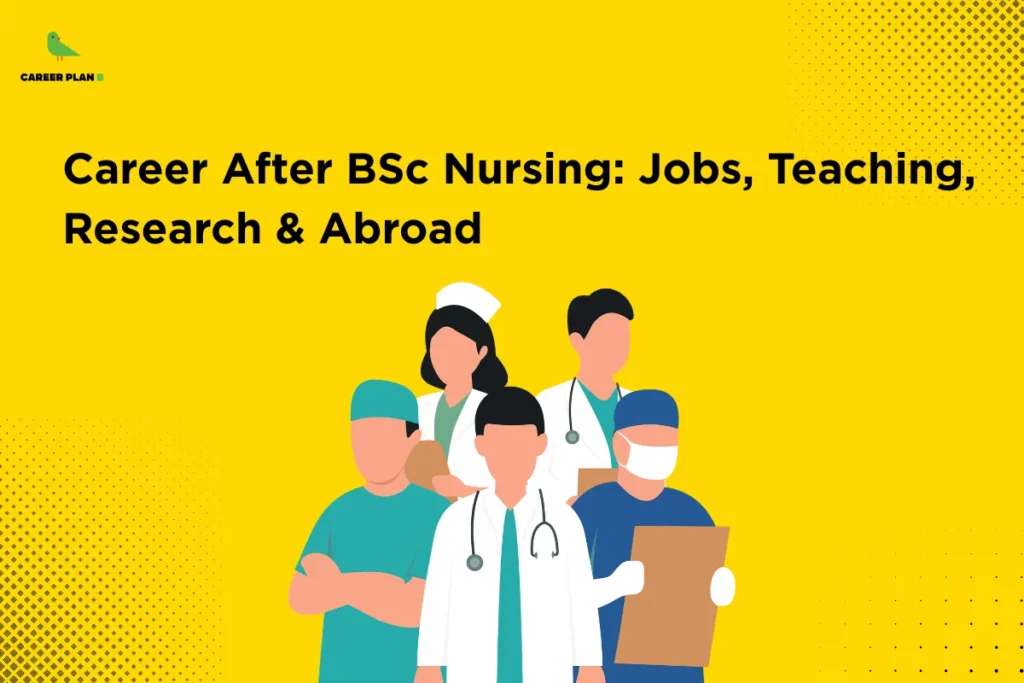
Introduction
You just completed your BSc Nursing degree — now what?
Many nursing graduates find themselves at this exact crossroads. You’ve spent four years mastering clinical skills, anatomy, and patient care. But when it comes to mapping out your future, the options can feel overwhelming — or worse, invisible.
Here’s the truth: a BSc Nursing degree opens far more doors than most people realize. Whether you want to work in a top hospital, teach the next generation of nurses, contribute to life-saving research, or build a career abroad — the scope is genuinely wide.
In this blog, we’ll walk you through four major career paths after BSc Nursing so you can make an informed, confident choice.
What Can You Do After BSc Nursing?
The career after BSc Nursing isn’t limited to one role or one setting. Graduates today work in hospitals, universities, research labs, public health organizations, and even internationally. The field is growing fast — India alone needs millions of trained nurses, and the global demand is even higher.
So whether you’re drawn to clinical work, academics, or something entirely different, there’s a path for you.
Confused about your next steps? Get a personalized roadmap tailored to your career goals.
Hospital Jobs After BSc Nursing
This is the most well-known route and for good reason. Hospitals remain the largest employers of BSc Nursing graduates.
Common roles include:
- Staff Nurse (General Ward, ICU, Emergency)
- Operation Theatre (OT) Nurse
- Paediatric or Maternity Nurse
- Infection Control Nurse
- Dialysis or Oncology Nurse (with additional training)
Government vs. Private Hospitals
Government hospital jobs — through AIIMS, ESIC, Railway Hospitals, or state health departments — offer job security, structured pay scales, and pension benefits. Private hospitals and corporate chains like Apollo, Fortis, and Manipal offer competitive salaries and faster career growth.
Salary range: Entry-level staff nurses in India typically earn ₹20,000–₹35,000 per month in private hospitals. Government positions can go higher with allowances and benefits.
Career in Nursing Education — Teaching Jobs
If you enjoy explaining, mentoring, and shaping future nurses, a career in nursing education could be your calling.
BSc Nursing graduates can work as:
- Nursing Tutors in GNM or ANM training schools
- Clinical Instructors in nursing colleges
- Lecturers (typically after completing MSc Nursing)
Most teaching positions at the degree college level require an MSc Nursing qualification. However, diploma-level institutions often hire BSc holders for tutor or demonstrator roles.
Nurse teaching jobs in India are not just stable — they’re meaningful. You directly influence how well-prepared tomorrow’s nurses are, which has a real impact on patient care across the country.
Research and Public Health Careers
Not everyone wants to work in a hospital or classroom — and that’s completely okay.
BSc Nursing graduates can build rewarding careers in:
- Clinical Research: Work as a Clinical Research Associate (CRA) or Research Coordinator with pharmaceutical companies, CROs (Contract Research Organizations), or hospitals
- Public Health Programs: Join government initiatives like the National Health Mission (NHM), UNICEF, WHO, or various NGOs focused on community health
- Health Education and Outreach: Work in rural or urban health awareness programs
Pursuing a Master of Public Health (MPH) after BSc Nursing can significantly expand your options in this space — both in India and globally.
Nursing research careers are growing steadily as India’s healthcare system becomes more evidence-based and data-driven.
Abroad Nursing Jobs for Indian Nurses
This is arguably the most talked-about path — and with good reason.
Countries like the USA, UK, Canada, Australia, and Gulf nations actively recruit Indian nurses. The demand is high, the salaries are significantly better, and many countries offer pathways to permanent residency.
Key steps to work abroad as a nurse:
- USA: Clear the NCLEX-RN exam and secure a visa sponsorship
- UK: Pass the NMC CBT (Computer-Based Test) and OSCE
- Australia: Register with AHPRA and meet English language requirements
- Gulf (UAE, Saudi Arabia, Qatar): Licensing through the respective health councils + IELTS/OET scores
Salary potential: Indian nurses working abroad can earn anywhere from ₹3 lakhs to ₹12+ lakhs per month equivalent, depending on the country and specialisation.
The path requires planning, licensing exams, and sometimes additional training but for many nurses, it’s absolutely worth it.
How Career Plan B Helps
Choosing the right path after BSc Nursing can feel confusing without the right guidance.
Career Plan B offers
- Personalised career counselling
- Psychometric test
- Career assessment tests
- Career roadmapping
To help nursing graduates identify their strengths and match them to the right opportunities, whether in India or abroad.
For Latest Information
Frequently Asked Questions
- Can I do an MSc Nursing directly after BSc Nursing?
Yes. MSc Nursing is the most common postgraduate option after BSc Nursing. It opens doors to specialised clinical roles, teaching positions, and research careers.
- Is the NCLEX exam difficult for Indian nurses?
The NCLEX-RN is challenging but very achievable with focused preparation. Many Indian nurses clear it successfully each year. Coaching programs and structured study plans make a big difference.
- What is the best career option after BSc Nursing in India?
It depends on your interests. Hospital jobs offer immediate employment, teaching suits those who enjoy mentoring, research is great for analytical minds, and abroad opportunities suit those looking for higher earnings and global exposure.
- Do I need work experience before applying for jobs abroad?
Most countries prefer at least 1–2 years of clinical experience before sponsoring a nurse for international roles. However, some Gulf positions are open to fresh graduates.
Conclusion
A BSc Nursing degree is not just a qualification — it’s a launchpad.
Whether you choose to work in a hospital, inspire students in a classroom, contribute to healthcare research, or build a life abroad, the opportunities are real and growing. The key is to understand your strengths, explore your options, and make a plan that aligns with your goals.
Don’t leave your career to chance. Take that next step with clarity and confidence.
Ready to figure out your best path after BSc Nursing? Connect with Career Plan B for personalised guidance tailored just for you.