Likhith · March 27, 2026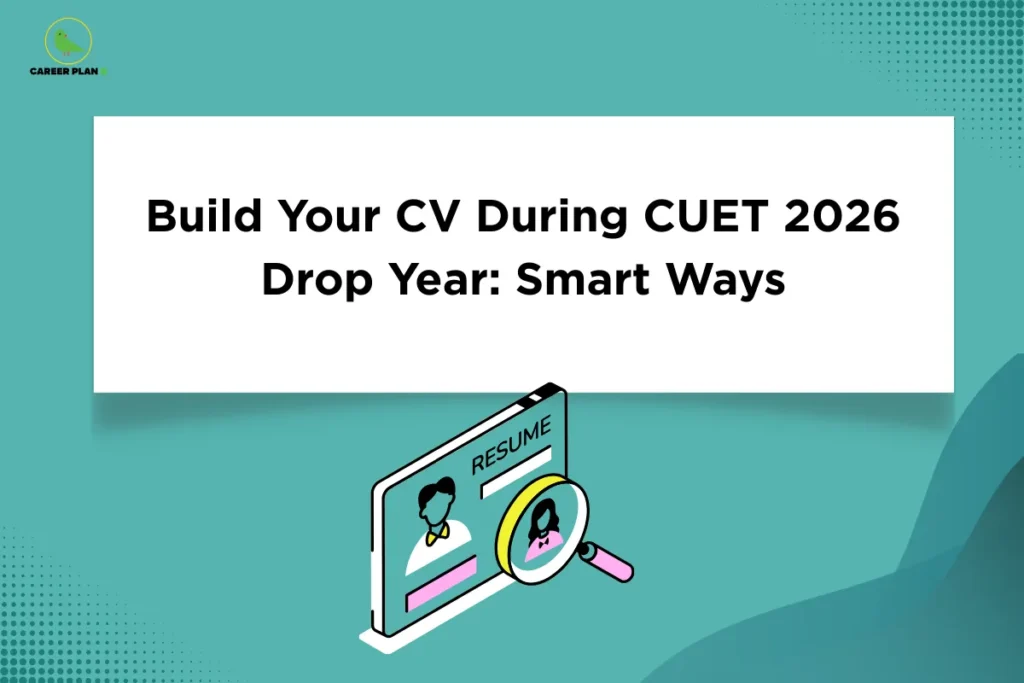
Introduction
Taking a gap year after an important exam can feel overwhelming. Many students worry that a drop year may slow down their academic journey or affect future opportunities. But in reality, a CV During CUET 2026 Drop Year can become one of the strongest parts of a student’s profile if used wisely. Instead of viewing it as lost time, students can treat it as a year of preparation, growth, and exploration.
A well-planned CV During CUET 2026 Drop Year can include internships, certifications, volunteer work, and skill development that many students do not get time for during regular schooling. By focusing on meaningful experiences, students can transform a gap year into a productive phase. Building a strong CV During CUET 2026 Drop Year not only improves college applications but also develops real-world skills that matter in today’s competitive academic environment.
Why a Drop Year After CUET Is Not a Waste
For many families and students, the idea of taking a drop year after CUET seems risky. But higher education trends show that academic institutions increasingly value skills, experience, and initiative along with exam scores.
According to the University Grants Commission, higher education institutions in India are focusing more on holistic development and interdisciplinary learning through initiatives like the National Education Policy. Students who use their gap year for learning and practical exposure often develop stronger academic profiles.
Similarly, the All India Council for Technical Education encourages students to participate in internships and skill-building programs through its national internship portal. These initiatives help students gain practical exposure beyond textbooks.
So instead of asking, “Will a drop year harm my future?” a better question might be: “How can I use this year to become a stronger candidate?”
What Should a Strong Student CV Include?
Before building a CV during your gap year, it is important to understand what universities and organizations look for.
Key Elements of a Strong Student CV
| Component | Why It Matters |
|---|---|
| Academic Achievements | Shows subject knowledge and academic dedication |
| Skill Certifications | Demonstrates continuous learning |
| Internship Experience | Provides real-world exposure |
| Volunteer Work | Reflects social responsibility |
| Leadership Activities | Shows initiative and teamwork |
When students build a CV during CUET 2026 drop year, these elements help present a balanced profile rather than just exam scores.
Smart Ways to Build Your CV During CUET 2026 Drop Year
The best way to use a gap year is by combining academic preparation with skill development. Let’s explore practical ways students can strengthen their profile.
1. Take Certified Online Courses
Online learning platforms have made high-quality education accessible to everyone. Students can gain new knowledge, certifications, and skills during their gap year.
Government-supported platforms like SWAYAM provide free courses designed by top Indian universities and institutions. These courses range from data science and economics to psychology and literature.
Another trusted platform is National Programme on Technology Enhanced Learning, which offers courses created by IITs and IISc. Completing such certifications adds credibility to your CV and shows initiative.
Examples of useful courses include:
- Data analysis and Excel
- Communication skills
- Basic programming
- Financial literacy
These certifications can significantly strengthen your CV during CUET 2026 drop year.
2. Gain Internship Experience
Internships provide one of the most valuable learning experiences for students. Even short-term internships can teach practical skills such as communication, teamwork, and problem-solving.
The AICTE Internship Portal offers internship opportunities across startups, NGOs, and companies for students across India.
Types of internships students can explore:
- Startup internships
- Research assistant roles
- NGO projects
- Digital marketing internships
Internships do more than improve your CV—they help you understand real workplace expectations.
3. Volunteer for Social Impact
Volunteering shows universities that students care about their communities and are willing to contribute to society.
Students can volunteer with programs such as the National Service Scheme, which focuses on community development, environmental awareness, and social outreach.
Volunteer activities may include:
- Teaching underprivileged children
- Participating in environmental campaigns
- Supporting community health drives
Such experiences add depth and purpose to a CV during CUET 2026 drop year.
4. Build Technical and Digital Skills
In today’s digital world, technical skills are becoming increasingly important for students across all fields.
Government initiatives like Skill India Mission encourage students to develop industry-relevant skills through training and certification programs.
Some high-value skills students can learn during their gap year include:
- Microsoft Excel and data analysis
- Basic coding (Python, HTML)
- Digital marketing fundamentals
- Graphic design
These skills can help students stand out during admissions and internships.
5. Participate in Competitions and Projects
Competitions help students showcase creativity, innovation, and analytical thinking. They also provide achievements that can strengthen a CV.
Students can participate in:
- Essay and writing competitions
- Innovation challenges
- Research competitions
- Online hackathons
Institutions such as the Ministry of Electronics and Information Technology regularly host innovation challenges and competitions that encourage students to build technological solutions.
Participating in such events can demonstrate initiative and intellectual curiosity.
Can a Drop Year Actually Improve College Admissions?
Surprisingly, yes. A well-planned gap year can strengthen a student’s academic profile.
Consider two students applying to the same university.
Student A:
Who only prepared for the exam during the drop year.
Student B:
Prepared for the exam, completed certifications, volunteered, and worked on internships.
Which student appears more motivated and proactive?
Universities often appreciate students who show initiative, curiosity, and learning beyond the classroom. A thoughtfully planned CV during CUET 2026 drop year can highlight these qualities.
Weekly Plan to Build Your CV During CUET 2026 Drop Year
Creating a balanced schedule helps students stay productive without feeling overwhelmed.
| Activity | Suggested Weekly Hours |
|---|---|
| CUET Preparation | 15 hours |
| Skill Development Courses | 10 hours |
| Internship Work | 15 hours |
| Volunteering | 5 hours |
| Personal Projects | 5 hours |
This structure ensures students maintain exam preparation while still improving their academic profile.
Common Mistakes Students Make During a Drop Year
Even with good intentions, students sometimes misuse their gap year.
Common mistakes include:
- Focusing only on exam preparation
- Ignoring skill development
- Not documenting achievements
- Avoiding internships due to fear or hesitation
- Not maintaining a proper CV or portfolio
Avoiding these mistakes can help students make the most of their CV during CUET 2026 drop year.
How Career Plan B Helps
Career Plan B supports students navigating a gap year after CUET through structured guidance:
- Personalized Career Counselling: Helps students understand their interests, strengths, and suitable academic pathways during their gap year.
- Psycheintel & Career Assessment Tests: Provides deeper insights into aptitude, personality traits, and career possibilities.
- Admission & Academic Profile Guidance: Assists students in understanding admission requirements while strengthening their academic profile.
- Career Roadmapping: Helps students build a structured plan and develop a strong, meaningful CV while preparing for their CUET journey.
Have any doubts?
Contact our expert counsellor today and get all your questions answered!
Frequently Asked Questions
1. Is taking a drop year after CUET bad for college admissions?
Not necessarily. If students use the year productively with certifications, internships, and volunteering, it can actually strengthen their academic profile and make their application more competitive.
2. How can I explain my drop year in interviews?
Be honest and highlight what you learned. Talk about skills gained, internships completed, or community work done during the year.
3. What certifications are useful during a gap year?
Courses related to communication, data analysis, coding, digital marketing, and research skills can be very valuable additions to a student CV.
4. Are internships possible during a CUET drop year?
Yes. Many startups, NGOs, and organizations offer internships specifically designed for students and fresh learners.
5. Does volunteering really help in college applications?
Yes. Volunteer work demonstrates social awareness, leadership, and commitment—qualities many universities appreciate.
Conclusion
A gap year after CUET does not have to be a setback. In fact, it can become one of the most valuable phases in a student’s academic journey. By focusing on internships, certifications, volunteering, and skill development, students can build a powerful CV during CUET 2026 drop year that reflects both knowledge and initiative.
Instead of seeing a drop year as lost time, think of it as an opportunity for growth. With the right planning and mindset, students can turn their gap year into a stepping stone toward stronger college applications, clearer career goals, and a more confident future.