Likhith · March 18, 2026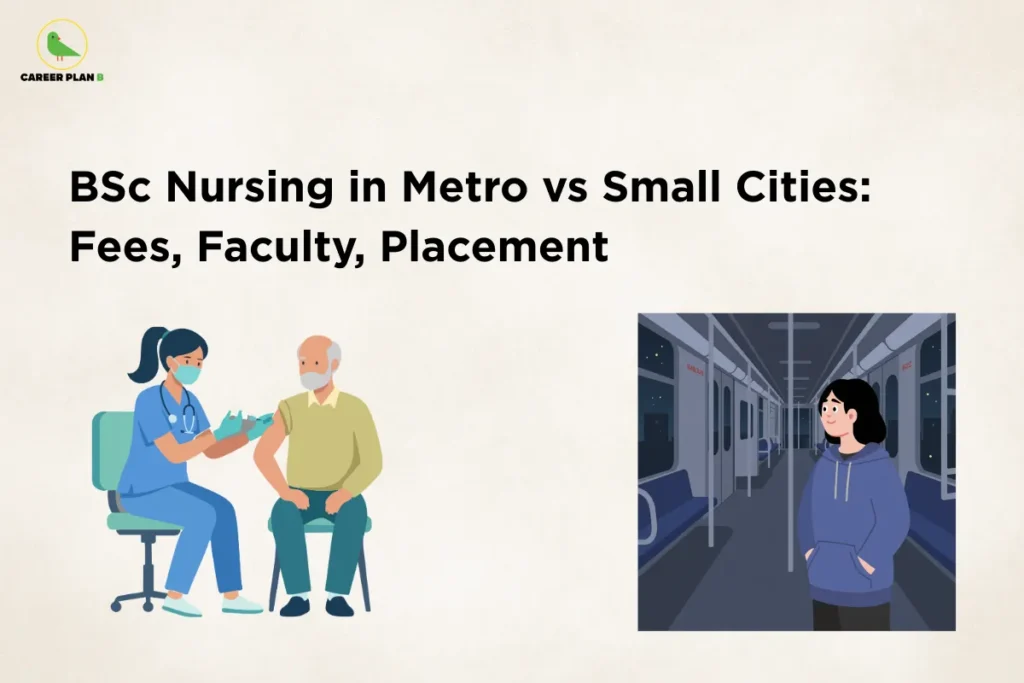
Introduction
Imagine standing at a crossroads after 12th Science: Should you chase the bright lights of Delhi, Mumbai, or Bangalore for your BSc Nursing, or opt for a quieter, more affordable college in Lucknow, Bhopal, or a smaller town? Many students face this dilemma—big cities promise better exposure and jobs, but at a steeper price. Small cities offer value and focus, yet raise questions about quality and opportunities.
In India, over 2,900 colleges offer BSc Nursing, with fees, faculty, and placements varying hugely by location. Metro colleges often provide advanced training, while smaller ones emphasize practical, community-focused care. This guide compares BSc Nursing in metros vs small cities across key factors: fees, faculty and clinical exposure, and placements to help you choose wisely.
Understanding Metro and Small Cities for BSc Nursing
Metro cities include bustling hubs like Delhi, Mumbai, Bangalore, and Chennai—home to top institutions like AIIMS Delhi or prestigious private colleges. Small cities (tier-2/3) cover places like Lucknow, Bhopal, Patna, or smaller towns in UP, MP, or Bihar, with solid government and private options.
Both prepare you for the same 4-year BSc Nursing degree (approved by INC), but differences in infrastructure, patient diversity, and costs shape your experience.
Fees Comparison – Where Can You Save?
Fees remain one of the biggest deciders. Government colleges stay affordable nationwide, but private ones show clear location-based gaps.
- Government colleges: Metro options like AIIMS Delhi cost as low as ₹2,000–₹6,000 total for the course (or ₹20,000–₹50,000 including extras). In small cities, similar low fees apply (₹10,000–₹50,000/year or a total of ₹50,000–₹1.5 lakh).
- Private colleges: Metros charge higher—often ₹1–3 lakh per year (total ₹4–12 lakh), due to better facilities and location. Small/tier-2/3 cities are more budget-friendly at ₹50,000–₹1.5 lakh/year (total ₹2–6 lakh).
Living costs add up too: Hostels and expenses in metros can be 30–50% higher. Overall, small cities save significantly on BSc Nursing fees in India, especially in private setups.
Faculty and Clinical Exposure – Quality vs Comfort
Faculty quality and hands-on training define nursing education.
- Metro cities: Top colleges boast experienced faculty (often PhD holders or specialists) from attached super-speciality hospitals. You get diverse cases—rare surgeries, ICUs, advanced labs—building broad skills fast.
- Small cities: Faculty provides strong basics, often with good local hospital ties. Clinical training happens in district or community hospitals—fewer rare cases but more direct responsibility and community health focus. Many tier-2 colleges now match metro standards in core training.
Do you want exposure to high-volume, complex cases (metros) or deeper one-on-one patient interaction in a less hectic setting (small cities)?
Both build competent nurses, but metros edge out for specialised exposure.
Placements and Salary After Graduation
Placements depend on college reputation, hospital ties, and location.
- Metro cities: Strong campus drives from chains like Apollo, Fortis, or Max. Freshers land jobs easier, starting BSc Nursing placements with a salary of ₹25,000–₹35,000/month (higher in private metros). Faster career growth follows.
- Small cities: Placements lean toward local/government hospitals or nearby chains. Starting pay is ₹15,000–₹25,000/month, but lower living costs balance it. Many grads migrate to metros later for better pay.
Freshers average ₹18,000–₹30,000/month nationwide (government higher at ₹35,000+ with benefits). Metros offer 20–40% higher starting pay, but small-city grads often succeed by gaining experience locally first.
Pros of metros: Higher salary, big networks.
Pros of small cities: Lower competition, affordable start, strong community roles.
How Career Plan B Helps
Confused between metro buzz and small-city affordability for BSc Nursing?
Career Plan B provides
- Clarity through Personalized Career Counselling
- Psycheintel + Career Assessment Tests
- We assess your budget, preferred exposure, and location priorities
- Receive expert Admission and Academic Profile Guidance
- Plus detailed Career Roadmapping to select the perfect college
Ensuring no regrets in your nursing journey.
Have any doubts?
📞 Contact our expert counsellor today and get all your questions answered!
FAQs
- Which is cheaper for BSc Nursing – a metro or a small city?
Small cities (especially private colleges) are cheaper, often with 30–50% lower fees and living costs, while government options stay low everywhere.
- Do metro colleges guarantee better placements?
Not guaranteed, but metros offer more opportunities and higher starting salaries due to big hospital networks. Small-city grads succeed too, often relocating later.
- Is faculty quality much better in big cities?
Metros have more specialized faculty and diverse cases, but small cities deliver solid, practical training; many now match metro basics.
- Can I get good clinical exposure in small cities?
Yes, focus on community and district hospitals gives hands-on responsibility. Less variety than metros, but excellent for foundational skills.
- What salary to expect after BSc Nursing?
Freshers earn ₹18,000–₹35,000/month (metros higher at ₹25,000+). Government jobs pay more with perks; experience boosts it quickly.
Conclusion
Metro cities shine in advanced faculty, diverse clinical exposure, and higher BSc Nursing placement salaries but come with steeper BSc Nursing fees in India. Small cities win on affordability, focused training, and easier starts; they are ideal if budget or hometown matters.
Your choice depends on goals: prestige and speed (metro) or value and balance (small city). Either path leads to a rewarding nursing career.
Not sure what fits you best? Connect with Career Plan B experts for personalized counselling and roadmapping today. Your first step shapes lives—make it the right one!