Likhith · March 11, 2026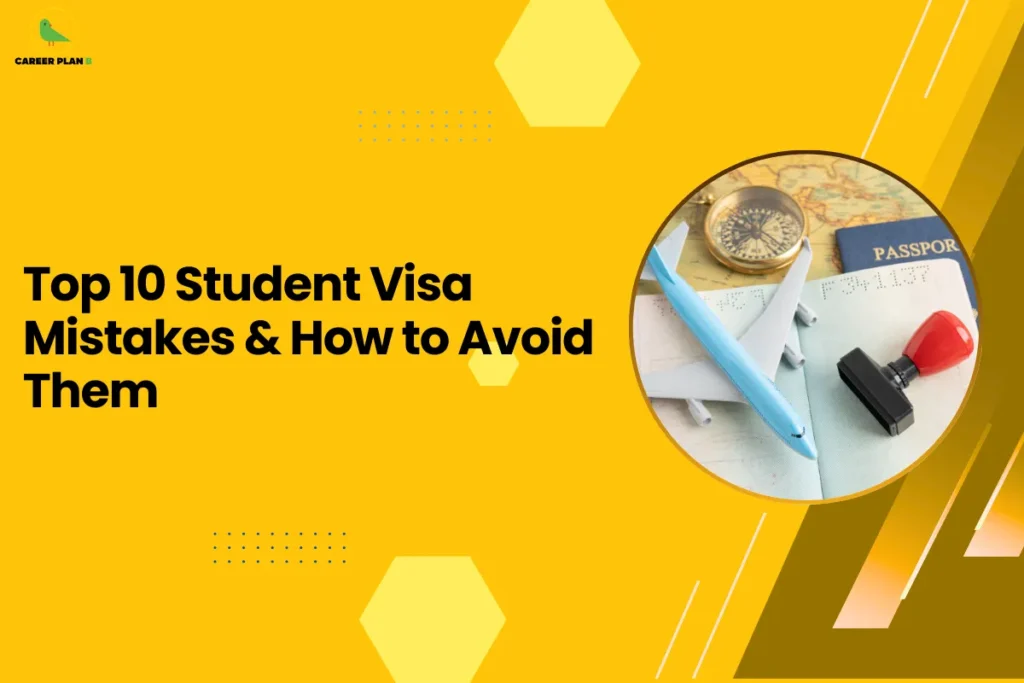
Introduction
Imagine this: You’ve got your acceptance letter from a top university, bags packed, dreams ready, and then a single slip-up at the immigration counter crushes everything. Heartbreaking, right? Every year, thousands of bright students face student visa mistakes that lead to rejection. Recent trends show U.S. F-1 visa refusal rates hovering around 35-40% in recent years, with similar challenges in Canada, the UK, and Australia. The good news? Most common student visa errors are completely avoidable with smart preparation.
In this guide, we’ll break down the top 10 student visa mistakes, explain why they cause visa denial, and share actionable steps to dodge them. Whether you’re aiming for an F-1 visa, UK student route, or Canadian study permit, these tips will boost your confidence.
The Top 10 Student Visa Mistakes (And Fixes)
- Incomplete or Incorrect Application Forms Typos, missing fields, or mismatched details on forms like DS-160 (U.S.) often trigger instant red flags.
How to Avoid: Double-check every entry against your passport and I-20/offer letter. Fill forms in a quiet space, save drafts, and review twice before submission. - Submitting Insufficient or Inconsistent Documents Missing bank statements, outdated proofs, or mismatched names across papers rank high among student visa rejection reasons.
How to Avoid: Create a checklist from the official embassy site. Organize everything in a clear folder—include recent statements, sponsor affidavits, and translations if needed. - Failing to Prove Strong Ties to Your Home Country Visa officers assume immigrant intent unless you show clear reasons to return (family, job prospects, property). This is the #1 cause under Section 214(b) for U.S. visas.
How to Avoid: Prepare evidence like family photos, job offer letters, property deeds, or future career plans in your home country. Speak confidently about returning. - Weak or Inadequate Financial Proof Sudden large deposits, unclear sponsor sources, or insufficient funds top the financial proof for visa pitfalls.
How to Avoid: Show stable funds covering at least the first year (tuition + living costs). Use 6-12 months of bank statements; explain any large deposits with proof. - Poor Preparation for the Visa Interview Nervous rambling, vague answers, or scripted responses make officers doubt your intent.
How to Avoid: Practice common questions: Why this course? Why this country? What after studies? Be honest, concise, and natural—smile and maintain eye contact. - Not Paying Fees on Time Forgetting SEVIS (U.S.) or visa fees delays or cancels your slot.
How to Avoid: Pay early and keep receipts. Track deadlines religiously. - Scheduling the Interview Too Late Waiting until the last minute risks missing your program start date.
How to Avoid: Book as soon as you get your I-20/offer—aim for 3-4 months before classes begin. - Inconsistent or Vague Answers About Study Plans Not explaining why this specific program or university raises doubts.
How to Avoid: Research deeply. Link your past education, career goals, and how the course fits perfectly. - Ignoring Country-Specific Requirements Rules differ—the U.S. focuses on ties, Canada on acceptance + funds, UK on CAS.
How to Avoid: Check official sites (uscis.gov, gov.uk, canada.ca) for your destination. Tailor your prep accordingly. - Relying on Over-Coached or Generic Responses Sounding rehearsed or using memorized lines often backfires.
How to Avoid: Speak from the heart. Use your real reasons and experiences; authenticity wins.
These visa interview mistakes and errors in the study abroad visa process are common, but preparation turns them into non-issues.
Also visit for the top 5 mistakes to avoid.
How Career Plan B Helps
Facing visa hurdles or unsure if your study choice strengthens your application?
Career Plan B provides
- Personalized Career Counselling
- Psycheintel and Career Assessment Tests
- Admission and Academic Profile Guidance
- Expert Career Roadmapping
These services help clarify your goals, build a strong profile, and reinforce genuine study intent, making your visa case more convincing.
Have any doubts?
📞 Contact our expert counsellor today and get all your questions answered!
Frequently Asked Questions
- What is the most common student visa rejection reason?
Failing to prove you’ll return home (Section 214(b) in the U.S.)—strong family, job, or property ties usually solve this.
- How can I prove ties to my home country?
Show family responsibilities, future job offers, property ownership, or community involvement. Be ready to discuss your post-study plans clearly.
- What documents are essential for financial proof?
Bank statements (6+ months), sponsor income proof (ITR/salary slips), scholarships, or education loans. Ensure funds cover full costs.
- How long before my program starts should I schedule the visa interview?
Ideally 3-4 months ahead to allow time for processing or reapplication if needed.
- Can I reapply after a student visa denial?
Yes; address the refusal reason (e.g., better ties proof) and submit a new application. Many succeed on the second try.
- Is professional help worth it for visa applications?
If you’re unsure about documents or interview prep, guidance can boost confidence and reduce errors, especially for complex cases.
Conclusion
The biggest takeaway? Most student visa mistakes stem from rushing or overlooking details. Double-check documents, practice honest answers, and prove your intent clearly—you’ll stand out positively.
Your dream education is within reach; don’t let preventable errors stop you. Ready to strengthen your profile and plan? Connect with Career Plan B for personalized counselling, assessments, and roadmapping today. Take that confident step forward—your future self will thank you!