Geetansh · March 14, 2026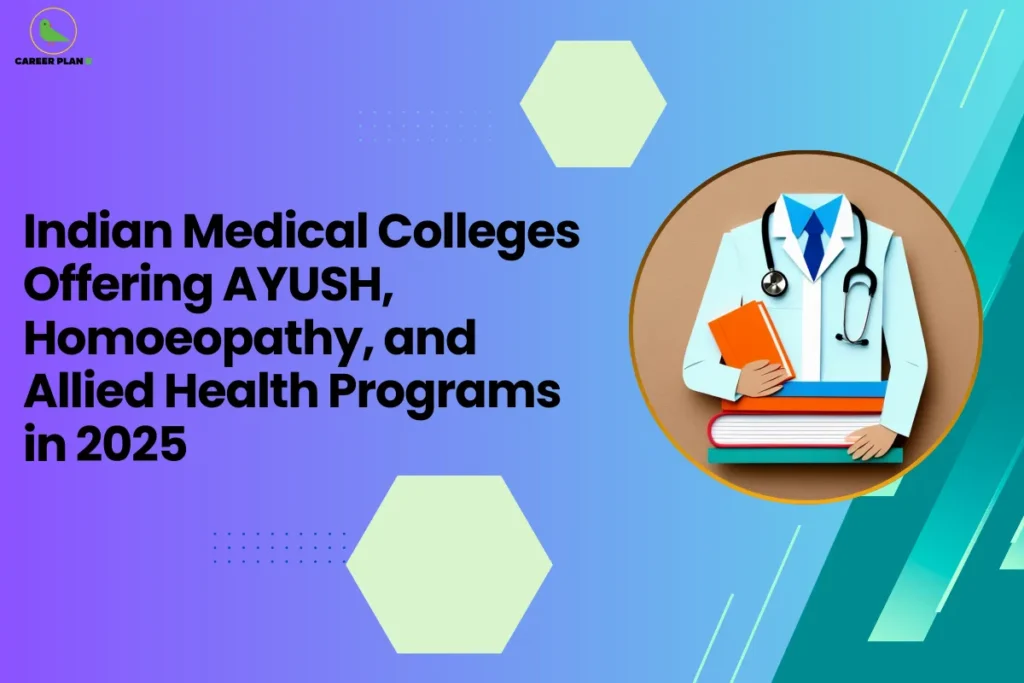
Introduction
Are you passionate about traditional Indian medicine or supporting healthcare through allied fields? With the growing demand for holistic and integrated health solutions in India, courses in AYUSH systems (Ayurveda, Yoga & Naturopathy, Unani, Siddha, Homoeopathy) and Allied Health Sciences are booming. These programs blend ancient wisdom with modern science, offering rewarding careers in wellness, hospitals, research, and private practice.
Admission to most AYUSH undergraduate courses (like BAMS, BHMS, BUMS, BSMS) requires qualifying NEET-UG, while Allied Health programs often have state-level or institute-specific entrances. In 2025, the National Commission for Indian System of Medicine (NCISM) and National Commission for Homoeopathy (NCH) regulate AYUSH education, ensuring quality standards.
This guide covers prominent colleges, their programs, and official websites for authentic information. Let’s dive in!
Why Pursue AYUSH and Allied Health Programs?
India’s healthcare landscape is shifting toward integrative medicine. AYUSH systems treat root causes holistically, while allied health fields (physiotherapy, audiology, and nursing) provide essential support services. Graduates enjoy opportunities in government hospitals, private clinics, wellness centers, and even abroad.
Key benefits include:
- Affordable government seats
- Rising job demand post-pandemic
- Options for PG specialization (MD/MS in AYUSH)
Imagine healing with herbs, yoga, or speech therapy—it’s not just a job; it’s a lifestyle of service.
Top AYUSH Colleges in India (Ayurveda, Unani, Siddha, Homoeopathy)
AYUSH courses are regulated by NCISM (for Ayurveda, Unani, Siddha) and NCH (for Homoeopathy). Here are standout institutions:
Leading Ayurveda (BAMS) Colleges
Ayurveda remains the most popular AYUSH stream.
- National Institute of Ayurveda (NIA), Jaipur — A premier government institute under the Ministry of AYUSH, known for excellent research and facilities.
- Banaras Hindu University (BHU), Varanasi — Faculty of Ayurveda offers top-ranked BAMS with strong clinical exposure.
- Government Ayurveda College, Thiruvananthapuram — One of the oldest government colleges, excelling in traditional Kerala Ayurveda. Official website: Search via Kerala University of Health Sciences or NCISM portal.
- Gujarat Ayurved University (now Institute of Teaching & Research in Ayurveda), Jamnagar — A deemed university pioneering Ayurveda education and research.
For the full updated list of permitted Ayurveda colleges (2025-26), visit the Official NCISM website
Notable Homoeopathy (BHMS) Colleges
Homoeopathy focuses on “like cures like” principles.
- National Institute of Homoeopathy, Kolkata — Apex government institute for BHMS and PG programs.
- Nehru Homoeopathic Medical College & Hospital, New Delhi — Government-run with modern facilities. Official website: Check via University of Delhi or NCH.
For the complete recognized list, refer to the Official NCH portal (Permission status PDFs available, e.g., for 2024-25 and ongoing updates).
Unani (BUMS) and Siddha (BSMS) Highlights
- Ajmal Khan Tibbiya College, Aligarh Muslim University — Leading government Unani institution.
- Government Siddha colleges are prominent in Tamil Nadu (e.g., Government Siddha Medical College, Chennai). Check NCISM for state-wise lists.
Allied Health Sciences Programs and Colleges
Allied Health includes BPT (Physiotherapy), BSc Nursing, BASLP (Audiology & Speech Language Pathology), and more (e.g., MLT, Radiology).
These are often regulated by state health universities or RCI (for BASLP).
Prominent examples:
- Manipal College of Health Professions (MAHE), Manipal — Offers BPT, BASLP, BSc in various allied streams with global recognition.
- Amrita Vishwa Vidyapeetham — Strong BSc Allied Health Sciences programs, including BASLP.
- All India Institute of Speech and Hearing (AIISH), Mysore — Top for BASLP, government-backed.
- Acharya Institute of Allied Health Sciences, Bangalore — Comprehensive paramedical courses like BPT and BASLP. section)
For state-specific lists (e.g., Kerala nursing/allied seats), check official bodies like LBS Centre or respective university portals.
How Career Plan B Helps
Unsure about NEET scores or AYUSH/Allied paths?
Career Plan B offers
- Personalized career counselling to clarify options
- Psycheintel and career assessment tests to match strengths
- Admission/academic profile guidance
- Detailed career roadmapping
helping you map a fulfilling route in holistic or supportive healthcare without pressure.
Have any doubts?
📞 Contact our expert counsellor today and get all your questions answered!
FAQ: Common Questions About AYUSH and Allied Health Admissions
Q1: Is NEET mandatory for AYUSH courses ?
Yes, NEET-UG is required for BAMS, BHMS, BUMS, and BSMS nationwide.
Q2: What are the eligibility criteria for Allied Health programs?
Usually 10+2 with PCB (50-60% aggregate); some need entrance tests like institute-specific or state exams.
Q3: Are government colleges cheaper?
Yes—government AYUSH seats often cost ₹10,000–₹50,000/year vs. higher private fees.
Q4: Can I pursue PG after these programs?
Absolutely—MD/MS in AYUSH or MPT/MSc in Allied fields for specialization.
Q5: How to check the latest approved colleges?
Always refer to official NCISM for AYUSH and NCH for Homoeopathy.
Q6: What career options exist beyond clinical practice?
Research, teaching, wellness tourism, public health, or hospital administration.
Conclusion
Choosing AYUSH, homeopathy, or Allied Health means joining India’s rich tradition of care while embracing modern opportunities. Start by checking official websites and NEET prep; your journey to becoming an Ayurvedic doctor, homeopath, physiotherapist, or audiologist awaits!
Ready to take the next step? Assess your options with expert guidance and apply confidently. The future of healthcare needs compassionate professionals like you—what’s stopping you?