Martha Divakar · March 12, 2026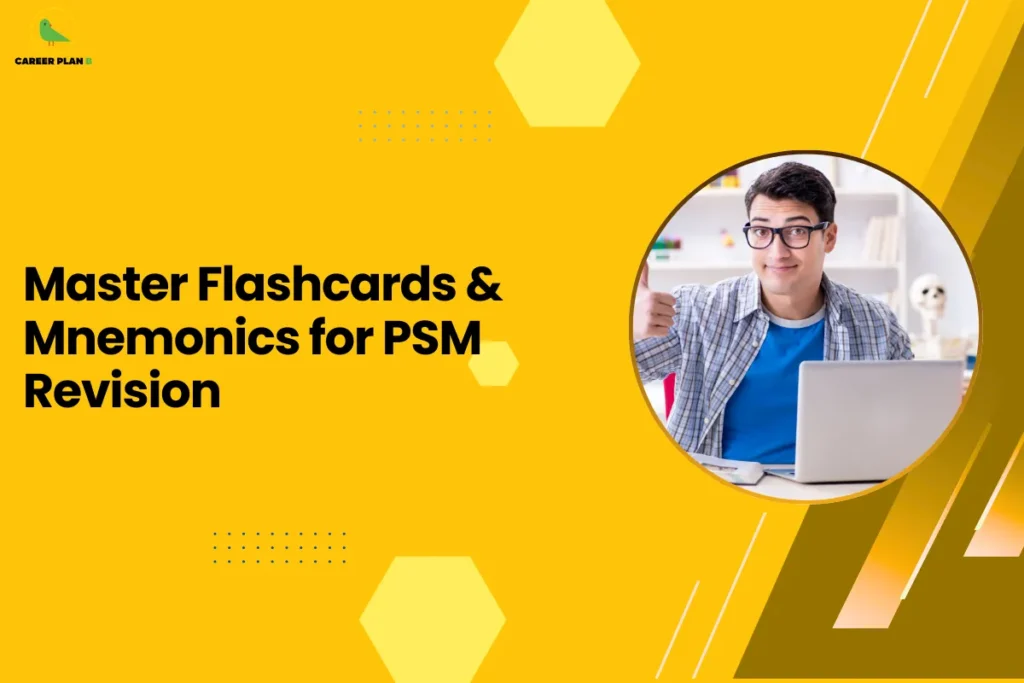
Introduction
Imagine staring at pages of national health programs, committees, vaccines, and epidemiology stats the night before your exam — heart racing, details blurring. Sound familiar? PSM (Preventive and Social Medicine, also called Community Medicine) is heavy on memorization. Lists, timelines, and classifications can feel impossible to retain.
The good news? Flashcards paired with mnemonics turn rote learning into quick, confident recall. These PSM revision techniques use active recall and spaced repetition — proven to boost retention dramatically. Studies show spaced repetition can improve long-term memory by over 200% compared to cramming. Ready to make PSM stick? Let’s dive into practical ways to use flashcards and mnemonics effectively for your NEET PG PSM preparation or daily medical studies.
Why Flashcards Work So Well for PSM Revision
Flashcards force active recall — you test yourself instead of passively re-reading notes. This strengthens memory pathways far better than highlighting. Add spaced repetition (reviewing at increasing intervals), and you fight forgetting curves effectively.
For PSM, flashcards shine with bite-sized facts: vaccine schedules, national programs, modes of transmission, or sensitivity/specificity formulas. Apps like Anki automate spacing, so you review weak areas more often. Many medical students report higher scores when using Anki for subjects like PSM.
How to Create High-Yield Flashcards for Community Medicine
Make your own cards — it’s the best way to process information deeply.
- Keep it simple: One concept per card. Avoid long paragraphs.
- Use question format: Front = prompt or question; back = answer + short explanation.
- Focus high-yield topics: National health programs, committees, epidemiology indices, vaccines, levels of prevention.
- Add visuals if possible: Simple diagrams for mosquito vectors or program components.
- Incorporate mnemonics: Put them on the back for instant hooks.
- Tag cards: Group by topic (e.g., “RCH Programme”, “Epidemiology”) for targeted review.
Example:
Front: What are the key components of the Reproductive and Child Health (RCH) Programme?
Back: Maternal health, child health, adolescent health, family planning — plus mnemonic if you create one.
Best Ways to Study with Flashcards Effectively
Consistency beats marathon sessions.
- Do short daily reviews (20–40 minutes).
- Always recall before flipping—no peeking early.
- Shuffle decks to avoid order bias.
- Re-review missed cards sooner.
- Use Anki’s spaced repetition algorithm for automatic scheduling.
Ever read a vaccine schedule and forget it hours later? Flashcards fix that by forcing repeated active recall at the right times.
Power of Mnemonics in PSM — Make Lists Stick Forever
Mnemonics create mental shortcuts for tricky lists. They work best when funny, personal, or absurd—your brain loves novelty. Use acronyms, acrostics, or rhymes for PSM topics like committees, disease vectors, prevention levels, or notifiable diseases.
The key? Make them your own for stronger recall. Combine with flashcards: place the mnemonic on the card back so you see the cue during review.
PSM Mnemonics in Tabular Format
Here are high-yield, popular mnemonics tailored for PSM revision (drawn from common medical education resources and student favorites):
| Topic | Mnemonic | Full Meaning / Explanation |
| Vectors & Diseases (Aedes aegypti) | Rosy Cheeks Yellow Dimple Rift | Rift valley fever, Chikungunya, Yellow fever, Dengue (Rosy = ? playful twist for recall) |
| PSM Committees (key ones) | Bhore – Jungle – Kartar – Chadha – Srivastava | Bhore (1946: Health Survey), Jungle (1948: integration), Kartar Singh (1973: multipurpose workers), Chadha (1966: malaria), Srivastava (1975: medical education) |
| Levels of Prevention | P-S-T (or similar) | Primary, Secondary, Tertiary (add modes: Health promotion, Specific protection, Early diagnosis, Disability limitation, Rehabilitation) |
| Diseases Under International Surveillance | P-S-I (or Plague Smallpox Influenza) | Plague, Smallpox (historically), Influenza, plus others like cholera, yellow fever |
| Uses of Epidemiology | RESPECCT | Research, Evaluation, Services planning, Program evaluation, Education, Communication, Control, Training |
| National Immunization Schedule (basic hook) | B-O-H for birth | BCG, OPV zero dose, Hepatitis B at birth |
These act as quick anchors—test yourself daily!
Combining Flashcards and Mnemonics for Supercharged PSM Prep
Embed mnemonics directly into flashcards. Example:
Front: Mnemonic for key health planning committees in India?
Back: Bhore – Jungle – Kartar – Chadha – Srivastava (expand each with year and focus).
This combo turns heavy PSM lists into effortless recall for exams like NEET PG or FMGE.
How Career Plan B Helps
Feeling overwhelmed by PSM revision or unsure how it fits your bigger medical career goals?
Career Plan B provides
- Personalized career counselling
- Psycheintel and career assessment tests
- Admission guidance
- Career roadmapping
These tools help align your study strategy (like mastering PSM efficiently) with long-term success in PG entrances or beyond.
Have any doubts?
📞 Contact our expert counsellor today and get all your questions answered!
Frequently Asked Questions
- Which app is best for flashcards in PSM revision?
Anki is top choice for medical students — free, customizable, and uses spaced repetition automatically.
- How many flashcards should I review daily?
Start with 50–100 new cards/day, plus reviews. Adjust based on your schedule; quality > quantity.
- Do mnemonics really help long-term?
Yes—especially when combined with active recall and spaced repetition. They provide hooks; repetition cements them.
- Physical flashcards or digital?
Digital (Anki) wins for spacing and tracking progress, but physical works if you prefer handwriting.
- Can I use pre-made decks for PSM?
Yes—many exist for NEET PG PSM. But creating your own boosts understanding.
Conclusion
Flashcards and mnemonics are game-changers for PSM revision. Build concise cards, use active recall with spaced repetition, and hook lists with memorable mnemonics. Start small: pick one table mnemonic today and make 10 cards around it.
Your future self (and exam scores) will thank you. Ready to boost your community medicine retention? Build your first deck now—you’ve got this!