Likhith · March 1, 2026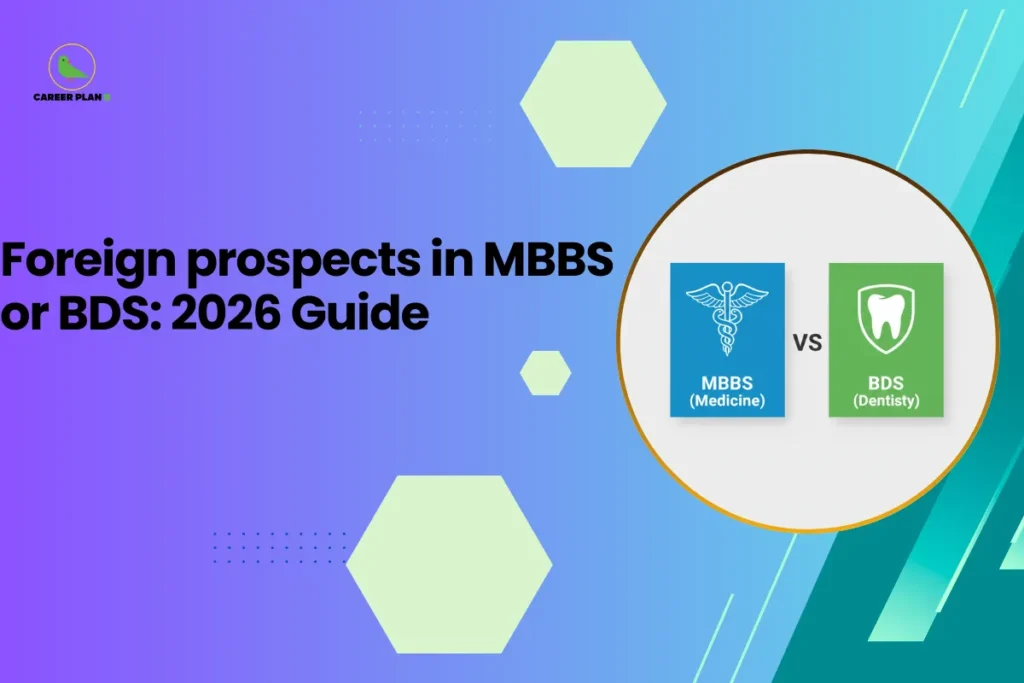
Introduction
Many Indian students dream of wearing that white coat—healing people as a doctor or bringing smiles as a dentist. But with limited seats and sky-high fees in India, thousands look abroad each year for MBBS or BDS. The big question: Will a foreign degree help you practice in India or build a career elsewhere?
In 2026, foreign prospects in MBBS or BDS remain strong for motivated students, but success hinges on following National Medical Commission (NMC) rules strictly. This guide uses only official NMC guidelines (from nmc.org.in) to explain realities, compare MBBS vs BDS abroad, and share practical tips in simple terms.
Understanding NMC Guidelines for Foreign Medical Degrees
The NMC (nmc.org.in) sets clear rules so foreign degrees match Indian standards. Key points from the official “For Students to Study Abroad” section:
- NEET is mandatory: For admissions after May 2018, you must qualify NEET-UG. Your NEET result acts as the eligibility certificate (valid for 3 years).
- Course requirements: The program must be at least 54 months (4.5 years) of study + minimum 12-month internship in the same foreign institution. Medium of instruction should be English, and it must cover core subjects like Indian MBBS.
- Screening test to practice in India: Almost all foreign medical graduates (MBBS equivalent) must clear the screening test—currently FMGE, transitioning toward NExT—for registration with NMC or State Medical Council.
- Exceptions: Graduates with UG from Australia, Canada, New Zealand, UK, or USA (plus PG there) may skip the screening.
- No endorsed list: NMC does not approve or list “best” foreign universities. Check World Directory of Medical Schools (WDOMS) yourself and confirm details directly with the institution.
- BDS note: NMC guidelines focus on medical (MBBS equivalent); dental (BDS) follows similar logic under Dental Council of India (DCI), but foreign BDS often requires equivalent screening/licensing for India practice.
These rules apply to both MBBS and BDS abroad—always verify latest on nmc.org.in.
MBBS Abroad—Career Prospects and Realities
MBBS abroad (Bachelor of Medicine, Bachelor of Surgery equivalent) trains you as a general doctor handling everything from fevers to surgeries.
- Duration: Usually 5–6 years (including internship).
- Popular affordable choices (English-medium, common among Indian students): Countries like Russia, Georgia, Philippines, Kazakhstan—total costs often ₹20–50 lakhs (tuition + living).
- Pros: Wide scope—work in hospitals, clinics, government jobs, or pursue PG/specializations (MD/MS in India after clearing NEXT/FMGE, or USMLE/PLAB abroad).
- Cons: High competition to pass FMGE/NEXT (pass rates vary, often 20–30%); cultural/language adjustment; must complete internship properly.
- Career outlook: Strong demand for doctors in India and globally. Starting salary in India after registration: ₹6–12 lakhs/year (private/government).
Think of MBBS as becoming a “family doctor” who treats the whole body.
BDS Abroad—Career Prospects and Realities
BDS (Bachelor of Dental Surgery) focuses on oral health—teeth, gums, and jaws.
- Duration: Typically 5 years + internship (similar structure).
- Popular options: Same countries as MBBS often offer BDS programs (affordable fees similar or slightly lower).
- Pros: More focused field; growing demand for dentists due to rising cosmetic dentistry and awareness; easier to start private clinic.
- Cons: Narrower scope (dentistry only); setting up a clinic needs investment; foreign BDS requires DCI recognition/screening to practice in India.
- Career outlook: Private practice, hospitals, or MDS for specialization (orthodontics, etc.). Starting salary in India: ₹4–8 lakhs/year, higher in own clinic.
Bachelor of Dental Surgery (BDS) is like becoming a “smile specialist” — rewarding if you love precision work.
Side-by-Side Comparison: MBBS vs BDS Abroad
Here’s a simple table to make it easy:
| Aspect | MBBS Abroad | BDS Abroad |
|---|---|---|
| Duration | 5–6 years + internship | 5 years + internship |
| Total Cost Range (affordable countries) | ~₹20–50 lakhs | ~₹15–45 lakhs |
| Scope of Practice | Full body medicine, surgery, PG options | Oral health, teeth, cosmetics |
| Job Demand in India | Very high (doctors needed everywhere) | High (especially private/cosmetic) |
| Global Opportunities | Excellent (USMLE, PLAB, etc.) | Good (specialized roles) |
| Licensing Challenge (FMGE/NEXT or equivalent) | Tough, pass rates vary | Similar screening via DCI |
| Starting Salary in India (approx.) | ₹6–12 lakhs/year | ₹4–8 lakhs/year (higher in clinic) |
Which One Should You Choose?
Ask yourself: Do you want to treat the entire body (MBBS) or focus on smiles and oral care (BDS)?
Consider your budget, interest in intense study, and comfort with licensing exams. Both offer solid foreign prospects in MBBS or BDS if you plan well.
How Career Plan B Helps
Confused about foreign prospects in MBBS or BDS? Career Plan B provides personalized career counselling, Psycheintel and career assessment tests, admission and academic profile guidance, plus career roadmapping. It helps match your strengths to realistic paths (India or abroad) without guesswork.
Have any doubts?
📞 Contact our expert counsellor today and get all your questions answered!
FAQs
- Is a foreign MBBS or BDS valid in India?
Yes, if it meets NMC/DCI rules (54+ months, internship, English medium) and you clear the screening test (FMGE/NEXT for medical; similar for dental).
- Do I need NEET for studying abroad?
Yes, it has been required for Indian students to be eligible since 2018.
- Which is easier—MBBS or BDS abroad?
BDS may feel less intense (focused field), but both need strong commitment and licensing exams. It depends on your passion.
- What about costs and safety?
Affordable in many countries (₹15–50 lakhs total), but research safety, living conditions, and university reputation yourself.
- How to check university recognition?
Visit nmc.org.in, check WDOMS, and confirm course details directly—NMC doesn’t endorse lists.
Conclusion
Foreign prospects in MBBS offer broader medical careers but demand passing tough exams to return to India. BDS provides focused dental paths with good private practice potential. Both can work if you follow official NMC guidelines closely.
Assess your goals honestly—passion + preparation wins. Check nmc.org.in for latest updates, or reach out to experts like Career Plan B for guidance. Your future in medicine or dentistry starts with the right informed step. What’s your next move?