Geetansh · April 8, 2026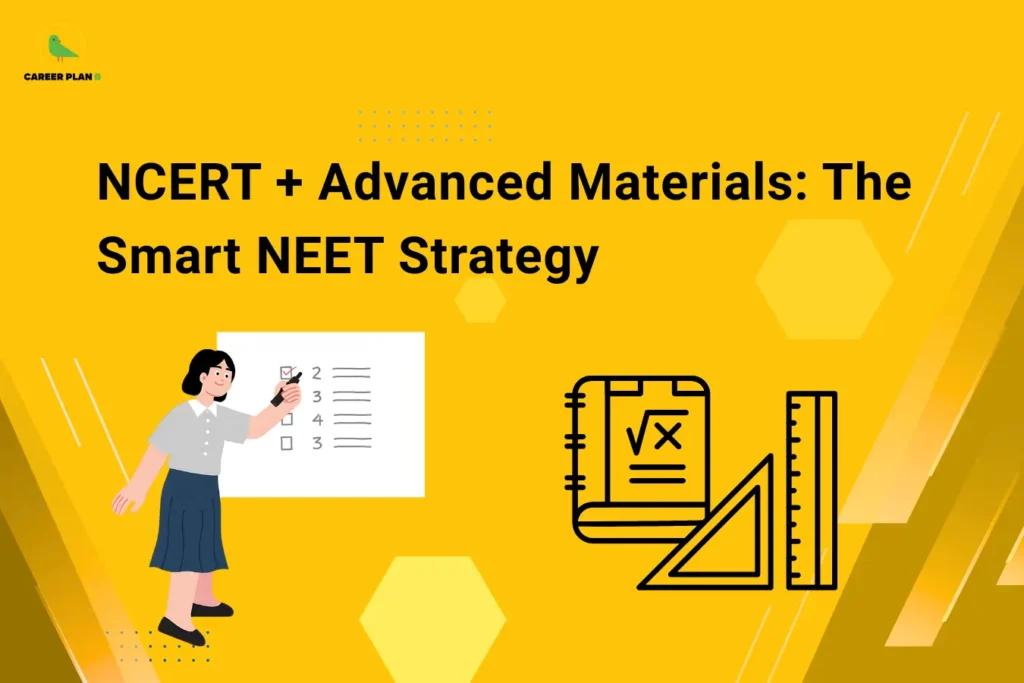
Introduction
Picture this: It’s 11 PM, and a NEET aspirant is surrounded by six different books – HC Verma, DC Pandey, MTG, and three highlighter-covered NCERTs. Sound familiar?
This is one of the most common traps NEET students fall into. Some swear by NCERT alone and panic when they hit a tricky Physics numerical. Others bury themselves in advanced reference books and forget that nearly 85% of NEET questions are rooted directly in NCERT content.
The truth? Neither extreme works. The real NEET preparation strategy lies in knowing how and when to use each resource. This blog breaks it down for you — simply, clearly, and practically.
Why NCERT Is the Foundation of NEET Preparation
Think of NCERT as the blueprint of a building. You cannot construct anything solid without it.
The National Testing Agency (NTA) designs NEET directly around the NCERT syllabus. This means that if you haven’t mastered your NCERT textbooks, no amount of advanced reading will save you on exam day.
Where NCERT Truly Shines
NEET Biology is perhaps the strongest example. NCERT tests chapters like Human Physiology, Genetics, and Ecology almost word-for-word. Even diagram labels and definitions carry direct marks. Students who read NCERT Biology thoroughly—multiple times— consistently report that a large chunk of the paper felt familiar.
For Chemistry, NCERT is equally essential for Physical and Organic concepts, reactions, and named reactions that appear regularly in the medical entrance exam.
Pro Tip: Treat NCERT not as a starting point but as your constant companion throughout preparation.
Confused about your next steps? Get a personalized roadmap tailored to your career goals.
Where NCERT Falls Short
Here’s the honest part — NCERT alone won’t get you the score you’re aiming for.
Physics is the clearest example. NCERT explains concepts well, but it doesn’t offer the variety of numerical problems that NEET demands. A student who has only solved NCERT Physics exercises will likely struggle with calculation-heavy questions on exam day.
Subjects and Topics That Need Advanced Materials
| Subject | NCERT Gap | What You Need |
| Physics | Limited numericals | DC Pandey, HC Verma |
| Chemistry (Organic) | Limited practice problems | MS Chouhan, VK Jaiswal |
| Biology | Mostly sufficient | MTG Fingertips for MCQ practice |
Advanced study materials fill these gaps – but only when used the right way.
The Right Way to Integrate Advanced Study Materials
Here’s the key principle: NCERT first, always.
Read the NCERT chapter thoroughly. Understand it. Make notes. Then and only then pick up your reference book for the same topic.
Best Reference Books by Subject
- Physics: HC Verma for concept clarity; DC Pandey for practice problems
- Chemistry: NCERT is strong, but MS Chouhan (Organic) and N Avasthi (Physical) add depth
- Biology: MTG NEET Fingertips and PYQ (Previous Year Question) banks work best alongside NCERT
Common Mistakes to Avoid
- Starting with reference books before finishing NCERT – this creates confusion, not clarity
- Collecting too many books — two to three good references per subject is more than enough
- Skipping NCERT diagrams — these are direct mark-givers in NEET Biology
- Using advanced material for topics where NCERT is sufficient – don’t overcomplicate what’s already clear
Building Your NEET Study Plan Around Both
A smart NEET exam tip is to think in phases:
Phase 1 — Foundation (Months 1–4): Cover all NCERT chapters topic by topic. Focus on understanding, not memorisation. Use reference books only for Physics numericals during this phase.
Phase 2 — Advanced Practice (Months 5–8): Introduce reference books fully. Solve MCQs, tackle higher-difficulty problems, and attempt topic-wise PYQs.
Phase 3 — Revision (Months 9–11): Return to NCERT. Revise it at least two to three times. Use short notes and flashcards. Solve full-length mock tests.
The pattern is clear — you begin with NCERT, grow with advanced materials, and always come back to NCERT. It’s a cycle, not a one-time read.
How Career Plan B Helps
Figuring out the right NEET preparation strategy on your own can feel overwhelming.
Career Plan B offers personalised career counselling and career roadmapping to help you build a study plan that actually fits your timeline and strengths.
With expert guidance and psychometric assessments, you’ll stop second-guessing your approach and start preparing with real direction.
For Latest Information
Frequently Asked Questions
Q1. Is NCERT enough for NEET Biology?
For most Biology topics, yes. NCERT covers around 90% of what’s asked. However, practicing MCQs with MTG Fingertips or PYQ banks is strongly recommended for exam readiness.
Q2. How many times should I read NCERT for NEET?
Ideally, three to five times. Each reading reveals details you may have missed earlier — especially in Biology.
Q3. Which reference book is best for NEET Physics?
HC Verma is excellent for building conceptual clarity, while DC Pandey is ideal for practicing a wide variety of numerical problems.
Q4. Should I make notes from both NCERT and reference books?
Make detailed notes from NCERT. For reference books, note down only formulas, shortcuts, and problem-solving techniques that go beyond what NCERT covers.
Conclusion
NEET is not a test of how many books you’ve read — it’s a test of how well you’ve understood and applied what matters most. NCERT is your strongest weapon, and advanced study materials are the tools that sharpen it further.
Master your NCERT first. Then supplement smartly. Revise consistently. And trust the process.
If you’re unsure where to begin or want a personalised study roadmap, Career Plan B is here to guide you— every step of the way.