Piyush · April 7, 2026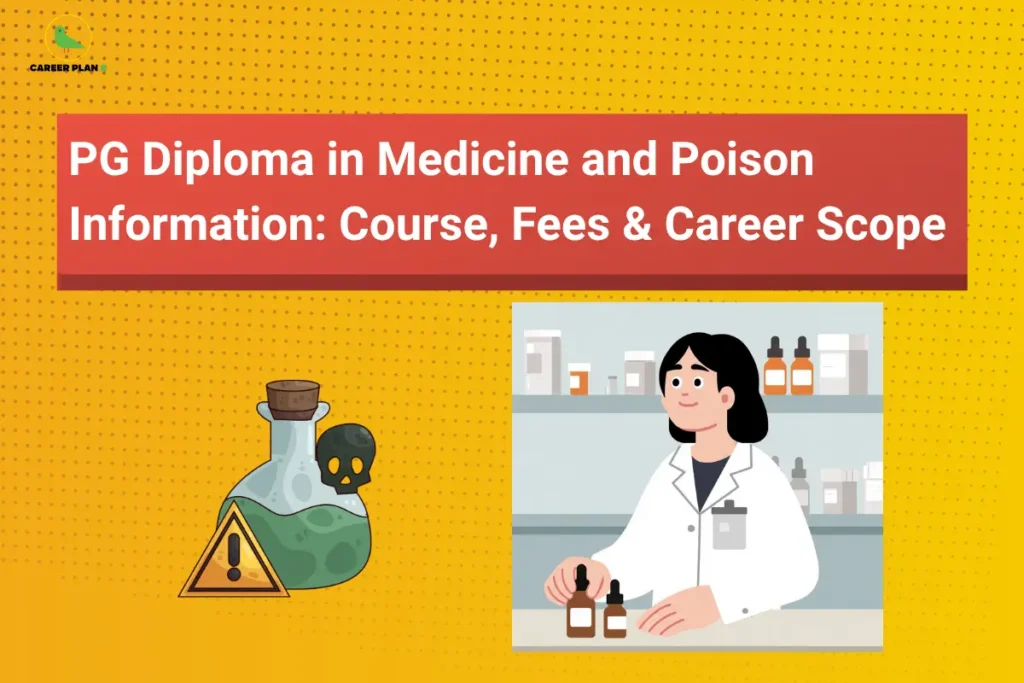
Introduction
Every year, over 1 lakh poisoning cases are reported across India — from accidental chemical exposure to drug overdoses and snake bites. Yet, very few healthcare professionals are specifically trained to handle these emergencies with precision. That’s a gap that costs lives.
If you’re a medical professional looking to specialise in a field that is critically needed but rarely talked about, the PG Diploma in Medicine and Poison Information might be exactly what you’ve been searching for.
This course equips you with the knowledge to identify, manage, and prevent poisoning cases — a skill set that is increasingly in demand across hospitals, poison control centres, and public health departments. In this blog, we’ll walk you through everything you need to know — from eligibility and admission to the syllabus, fees, and career scope.
What Is the PG Diploma in Medicine and Poison Information?
The PG Diploma in Medicine and Poison Information is a postgraduate-level diploma course designed for medical graduates who want to specialise in clinical toxicology and poison management. The course focuses on understanding toxic substances, their effects on the human body, emergency treatment protocols, and the functioning of poison information centres.
Confused about your next steps? Get a personalized roadmap tailored to your career goals.
Quick Course Overview:
| Parameter | Details |
|---|---|
| Course Level | Postgraduate Diploma |
| Duration | 1–2 Years |
| Course Type | Full-time / Part-time (varies by institution) |
| Mode | Offline |
| Offered By | Medical colleges and universities across India |
This is one of the few specialised courses in India that directly trains professionals for poison control and toxicology careers — a niche but growing field in modern healthcare.
Who Is Eligible to Apply?
Before you start filling out applications, here’s what you need to qualify:
- Educational Qualification: MBBS degree from a recognised university (recognised by the Medical Council of India or NMC)
- Internship: Completion of a mandatory rotating internship
- Registration: Valid registration with the State Medical Council
- Work Experience: Some institutions may prefer candidates with prior clinical experience, though it is not always mandatory
- Age Limit: Most institutions do not have a strict upper age limit for PG diploma admissions
If you’re a medical graduate wondering whether this course fits your profile, the answer is almost always yes — as long as your MBBS is from an NMC-recognised institution.
How Does the Admission Process Work?
The admission process for this course can vary slightly depending on the institution, but here’s a general step-by-step breakdown:
- Check Eligibility — Confirm you meet the academic and registration requirements
- Research Institutions — Identify colleges offering this diploma (AIIMS, regional medical universities, etc.)
- Fill the Application Form — Apply online or offline as per the institution’s process
- Entrance Exam or Merit-Based Selection — Some institutions conduct written tests; others admit on the basis of MBBS marks or interview performance
- Document Verification — Submit MBBS certificate, internship completion letter, medical council registration, and identity proof
- Counselling/Seat Allotment — Attend counselling if required
- Fee Payment and Enrolment — Complete the admission formalities
Documents Typically Required:
- MBBS marksheets and degree certificate
- Internship completion certificate
- Medical council registration certificate
- Transfer/Migration certificate
- Passport-size photographs
- Government-issued ID proof
Pro Tip: Always check the official website of your target institution for the most updated admission schedule and requirements.
Syllabus: What Will You Study?
The curriculum of the PG Diploma in Medicine and Poison Information is structured to give you both theoretical depth and practical exposure. Here’s a look at the core subjects:
Core Subjects:
| Subject | Focus Area |
|---|---|
| General Toxicology | Principles of poison action, dose-response |
| Clinical Toxicology | Diagnosis and treatment of poisoning cases |
| Pharmacology & Drug Overdose | Medication toxicity, overdose management |
| Environmental & Occupational Toxicology | Industrial chemicals, pesticide poisoning |
| Forensic Toxicology | Medico-legal aspects of poisoning |
| Poison Information Management | Running poison control helplines, data management |
| Emergency Medicine in Toxicology | ICU protocols, antidote therapy |
Practical Components:
- Clinical rotations in poison control centres
- Case study analysis
- Participation in toxicology helpline operations
- Laboratory work involving toxicological analysis
This combination of classroom learning and hands-on clinical exposure prepares you to handle real-world poisoning emergencies confidently.
Fees and Duration
Course Duration: Typically 1 to 2 years, depending on the institution and whether you’re enrolled full-time or part-time.
Fee Structure:
| Institution Type | Approximate Fees |
|---|---|
| Government Medical Colleges | ₹10,000 – ₹50,000 per year |
| Private Medical Colleges | ₹50,000 – ₹2,00,000 per year |
| Deemed Universities | ₹75,000 – ₹2,50,000 per year |
Fees can vary significantly based on location, institution reputation, and whether the course is government-aided. Always verify the latest fee structure directly with the institution before applying.
Career Scope: What Can You Do After This Course?
This is where the course really shines. The career scope in poison information management and clinical toxicology is broader than most people realise.
Job Roles You Can Pursue:
- Poison Information Specialist — Work at poison control centres, answering emergency queries from medical professionals and the public
- Clinical Toxicologist — Assist in diagnosis and treatment of poisoning cases in hospital ICUs and emergency departments
- Forensic Toxicologist — Work with law enforcement and forensic labs on medico-legal cases
- Public Health Consultant — Advise government bodies on chemical safety and environmental health
- Pharmaceutical Industry Consultant — Evaluate drug safety, adverse effects, and overdose protocols
- Academic and Research Roles — Teach toxicology or contribute to research in pharmacology and poison science
Sectors Hiring Toxicology Diploma Holders:
- Government hospitals and AIIMS
- National Poison Information Centre (NPIC)
- State poison control centres
- Pharmaceutical and chemical companies
- Forensic science laboratories
- Public health departments and NGOs
Expected Salary Range:
| Role | Approximate Salary (Per Annum) |
|---|---|
| Poison Information Specialist | ₹4,00,000 – ₹8,00,000 |
| Clinical Toxicologist | ₹6,00,000 – ₹15,00,000 |
| Forensic Toxicologist | ₹5,00,000 – ₹12,00,000 |
| Pharmaceutical Consultant | ₹8,00,000 – ₹20,00,000 |
With growing awareness around chemical safety, drug regulation, and emergency medicine, toxicology diploma course graduates are finding opportunities not just in India but also in global healthcare systems.
How Career Plan B Helps
Choosing a specialised medical course like this one requires more than just interest; it needs the right guidance.
At Career Plan B, we offer personalised career counselling to help medical graduates identify the best-fit postgraduate paths.
Whether it’s understanding your eligibility, building a strong academic profile, or mapping out your career roadmap in clinical toxicology, our experts are here to help you make an informed, confident decision.
For Latest Information
Frequently Asked Questions (FAQs)
- Is the PG Diploma in Medicine and Poison Information recognised by NMC?
Recognition varies by institution. Always verify whether the college and course are approved by the National Medical Commission (NMC) before enrolling.
- Can I pursue this course while working?
Some institutions offer part-time or flexible formats. However, clinical rotations may require physical attendance, so check the specific schedule with your institution.
- Is there an entrance exam for this course?
Not universally. Some institutions admit students based on MBBS merit or interviews, while others conduct written entrance tests. Check individual institution guidelines.
- What is the difference between a PG Diploma and an MD in Toxicology?
An MD in Pharmacology or Forensic Medicine is a 3-year postgraduate degree with a broader scope and higher academic standing. The PG Diploma is shorter and more focused and is a quicker route into the field.
- Are there job opportunities abroad for toxicology diploma holders?
Yes. Countries like the US, UK, Canada, and Australia have established poison control systems and hire qualified toxicologists. However, additional certifications or licensing may be required depending on the country.
Conclusion
The PG Diploma in Medicine and Poison Information is a hidden gem in India’s medical education landscape. It’s a focused, career-specific course that prepares you for a role that genuinely saves lives — one emergency call or ICU protocol at a time.
If you’re an MBBS graduate looking for a specialisation that is meaningful, in demand, and still relatively untapped, this could be your path forward. The career opportunities in clinical toxicology, poison control, forensic science, and pharmaceutical safety are only going to grow as India strengthens its public health infrastructure.
Take the next step — explore your options, assess your goals, and reach out to Career Plan B for guidance tailored to your profile.
Your medical career deserves more than a backup plan — it deserves the right plan.