Martha Divakar · March 1, 2026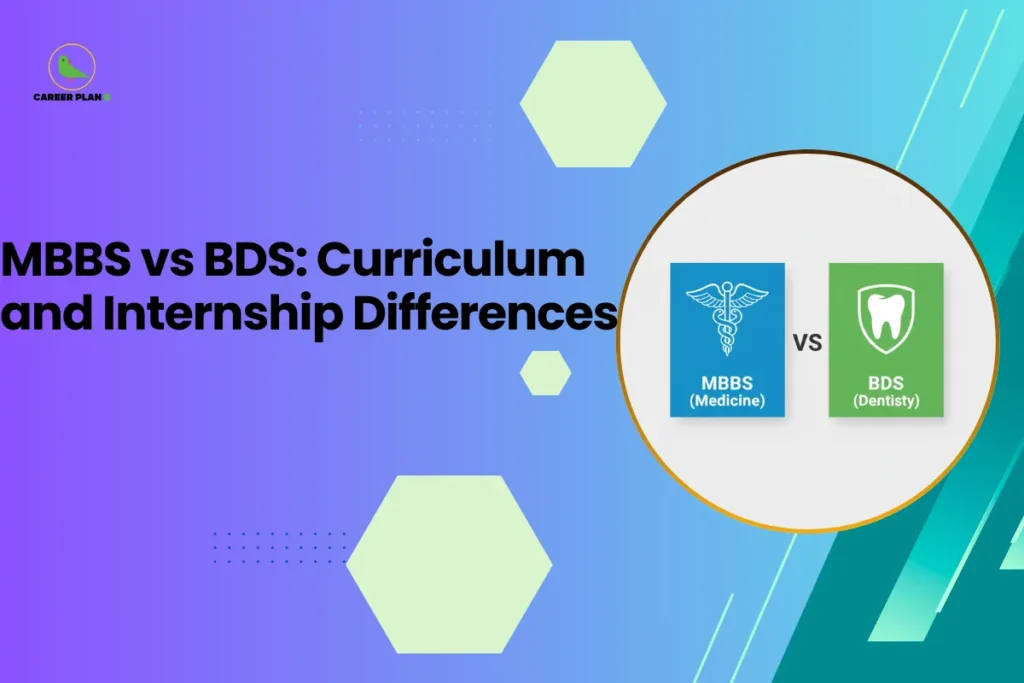
Introduction
Dreaming of a healthcare career but unsure whether to treat the entire body as a physician or focus on oral health and smiles as a dentist? MBBS (Bachelor of Medicine, Bachelor of Surgery) and BDS (Bachelor of Dental Surgery) are two popular options after qualifying NEET UG. Both lead to respected medical professions, share some foundational subjects, but diverge significantly in curriculum focus and real-world internship training.
Many students face this dilemma: MBBS offers broad exposure to general medicine and surgery, while BDS specializes in dental sciences. With over 1 lakh MBBS seats and around 27,000 BDS seats in India annually, choosing wisely impacts your future career path, work-life balance, and specialization options. (statewise list of MBBS college seats )
In this guide, we break down MBBS vs BDS curriculum and internship differences, using clear comparisons and tables for easy understanding. We’ll cover syllabus structure, phase-wise learning, and the compulsory rotating internship that bridges theory to practice.
Understanding MBBS and BDS Basics
MBBS trains you to become a general doctor capable of diagnosing and treating a wide range of illnesses across the human body. Regulated by the National Medical Commission (NMC), it’s the gateway to roles like physician, surgeon, or specialist via MD/MS.
BDS prepares you for dentistry, focusing on teeth, gums, jaws, and oral cavity issues. Governed by the Dental Council of India (DCI), it leads to careers as a dentist, with options for MDS specialization in areas like orthodontics or oral surgery.
Both require NEET qualification and emphasize hands-on skills, but their scope differs: MBBS is broad and multi-system; BDS is specialized in head, neck, and oral regions.
Key Differences in Curriculum—A Side-by-Side Comparison
The first 1-2 years of both courses overlap heavily in basic sciences, building a strong foundation. From the third year onward, paths diverge sharply.
Here’s a clear table comparing the curriculum:
| Aspect | MBBS | BDS |
|---|---|---|
| Total Duration | 5.5 years (4.5 years academic + 1 year internship) | 5 years (4 years academic + 1 year internship) |
| Regulatory Body | National Medical Commission (NMC) | Dental Council of India (DCI) |
| Pre-Clinical Phase (Years 1–2) | Anatomy, Physiology, Biochemistry (similar in both) | Same as MBBS: Anatomy (with dental emphasis), Physiology, Biochemistry, Dental Materials |
| Para-Clinical Phase | Pathology, Microbiology, Pharmacology, Forensic Medicine, Community Medicine | Pathology, Microbiology, Pharmacology, Oral Pathology, Preventive & Community Dentistry |
| Clinical Phase (Years 3–4/4.5) | General Medicine, Surgery, Pediatrics, Obstetrics & Gynecology, Orthopedics, ENT, Ophthalmology, Psychiatry, Dermatology | Oral Medicine & Radiology, Oral & Maxillofacial Surgery, Prosthodontics, Conservative Dentistry & Endodontics, Periodontics, Orthodontics, Pedodontics |
| Core Focus | General medicine, whole-body diagnosis & treatment, emergencies | Oral health, dental procedures, head & neck anatomy, smile aesthetics & function |
| Key Skills Developed | Patient history, systemic exams, procedures, emergency care | Extractions, fillings, root canals, crowns, braces, oral surgeries |
The early similarity allows some flexibility (e.g., understanding human biology), but MBBS dives into diverse diseases and systems, while BDS hones precise, skill-based dental techniques like restorations and prosthetics.
Internship—The Real-World Training Phase
Both degrees mandate a compulsory rotating internship of 1 year for full registration and practice license. This phase shifts from classroom to hospital/clinic, applying knowledge under supervision.
However, the scope and rotations differ vastly due to the professions’ nature.
MBBS Internship (Compulsory Rotating Medical Internship—CRMI, per NMC guidelines):
- Duration: 12 months
- Broad rotations across departments for comprehensive exposure
- Typical departments (approximate, as per NMC 2021 regulations and updates): Community Medicine (2 months), General Medicine (1.5-2 months), Surgery (1.5-2 months), Obstetrics & Gynecology (2 months), Pediatrics (1 month), Orthopedics, Casualty/Emergency, etc.
- Focus: Managing inpatients/outpatients, emergencies, deliveries, minor surgeries, public health
BDS Internship (Compulsory Rotating Dental Internship, per DCI regulations):
- Duration: 12 months (paid rotating in dental colleges/hospitals)
- Focused entirely on dental departments
- Typical rotations (from DCI BDS Course Regulations): Oral Medicine & Radiology, Oral & Maxillofacial Surgery (longer posting), Prosthodontics, Conservative Dentistry & Endodontics, Periodontics, Pedodontics, Orthodontics, Community Dentistry/Public Health Dentistry
- Focus: Performing procedures like extractions, fillings, root canals, scaling, denture fittings, minor oral surgeries
Table for quick internship comparison:
| Aspect | MBBS Internship | BDS Internship |
|---|---|---|
| Duration | 1 year (compulsory) | 1 year (compulsory, often paid in dental setup) |
| Nature | Multi-specialty hospital rotations | Dental college / clinic-focused |
| Key Rotations | Medicine, Surgery, OBG, Pediatrics, Community Medicine, Emergency | Oral Surgery, Prosthodontics, Conservative Dentistry, Periodontics, Orthodontics |
| Skills Gained | Broad clinical diagnosis, emergency handling, team-based care | Hands-on dental procedures, chairside skills, oral patient management |
| Regulatory Link | NMC Official Website | DCI Official Website |
MBBS interns handle diverse cases (e.g., heart attacks, deliveries), while BDS interns master precision tools and repeated procedures for oral issues.
Which Path Suits You Better? Factors to Consider
Ask yourself:
- Do you prefer variety and handling emergencies (MBBS) or focused, procedural work with potentially better work-life balance (BDS)?
- Interested in higher studies? MBBS opens wider MD/MS options; BDS leads to MDS in dental super-specialties.
- Scope: Both are strong in India, but MBBS often seen for broader opportunities; BDS excels in private practice and aesthetics.
How Career Plan B Helps
Confused between MBBS and BDS paths after NEET?
Career Plan B provides personalized career counselling to match your interests and strengths. Through Psycheintel and Career Assessment Tests, Admission and Academic Profile Guidance, plus detailed Career Roadmapping, we help clarify if general medicine or dental specialization fits you best—guiding entrance prep, college choices, and long-term planning.
Have any doubts?
📞 Contact our expert counsellor today and get all your questions answered!
FAQs
- Is the first two years’ syllabus the same for MBBS and BDS?
Yes, largely identical—Anatomy, Physiology, and Biochemistry, with minor dental additions in BDS.Have any doubts?
- How long is the internship for MBBS and BDS?
Both require 1 full year of compulsory rotating internship for registration.
- Which has more scope: MBBS or BDS?
MBBS offers broader medical roles; BDS provides strong private practice potential with growing demand in cosmetics and implants.
- Can BDS graduates practice general medicine?
No—BDS is limited to dental/oral procedures; they cannot treat systemic illnesses like MBBS doctors.
- Is BDS easier than MBBS?
Subjectively, BDS has focused content and often less intense emergencies, but both demand dedication and precision.
Conclusion
In summary, MBBS vs BDS curriculum and internship highlight a clear choice: broad, whole-body training in MBBS versus specialized oral expertise in BDS. Both feature similar foundational years and a 1-year compulsory rotating internship, but rotations and skills reflect their unique focuses—diverse emergencies in MBBS, procedural mastery in BDS.
Ultimately, pick based on passion: one heals bodies broadly, the other restores smiles precisely. Still unsure? Explore your options with expert support.
Ready to decide your path? Connect with Career Plan B for tailored guidance on NEET, admissions, and career mapping. Your future in healthcare starts with the right choice!