Likhith · December 4, 2025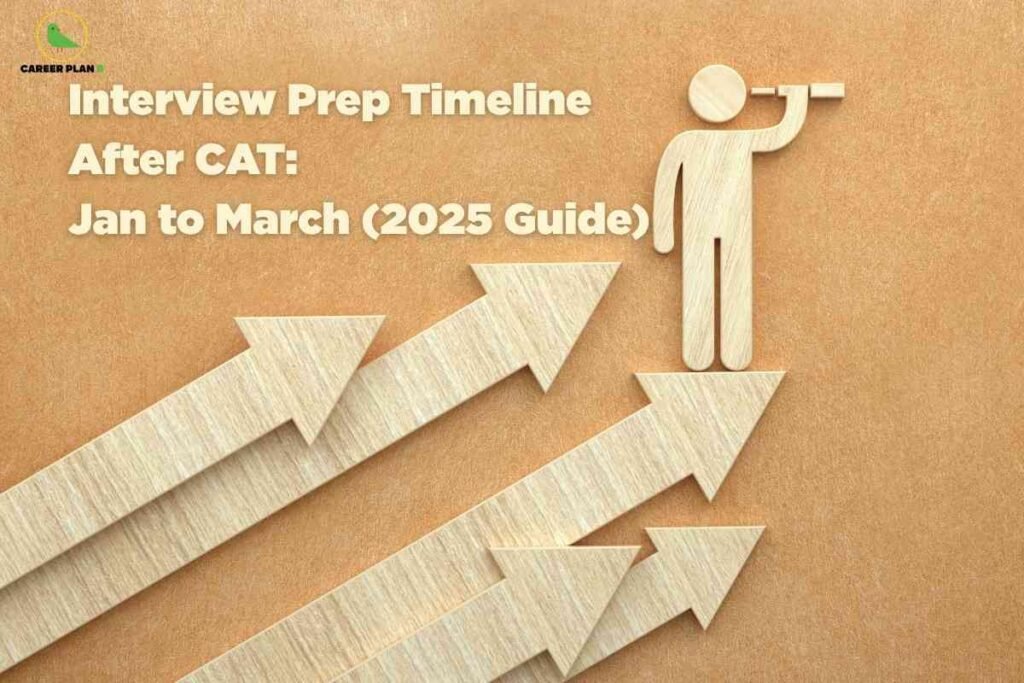
Introduction
The CAT exam may be over, but the real test has just begun. Between January and March lies the most crucial phase for every MBA aspirant — the Group Discussion (GD), Written Ability Test (WAT), and Personal Interview (PI) rounds. While the CAT percentile decides who gets shortlisted, it’s the interviews that decide who finally makes it in.
Yet most aspirants waste this window either waiting for results or underestimating interview preparation. By the time calls start pouring in from IIMs, SPJIMR, MDI, or NMIMS, they find themselves unprepared to answer the tough “Why MBA?” or “Tell me about yourself” questions confidently.
This blog will walk you through a month-by-month interview prep timeline from January to March — including what to focus on, key milestones, and how to balance readiness with authenticity. Whether you have multiple B-school calls or just a few, this roadmap ensures every day counts.
Why a Structured Interview Prep Timeline Matters
Think of CAT preparation as building a foundation, and the GD-PI-WAT phase as constructing the roof — both are essential. The January–March period is not simply a waiting zone; it’s a window to transform your CAT percentile into admission success.
Here’s a simple truth: Every year, thousands of 98+ percentilers fail to convert to top B-schools because of poor interview performance, while hundreds of 90–93 percentilers make it through with strong narratives and preparation.
A structured timeline helps you:
- Avoid last-minute panic once calls are released
- Prepare thoughtful, personalized answers
- Practice writing, speaking, and body language consistently
- Stay informed about current affairs and business trends
Let’s decode how to use every month strategically.
January – Build Your Foundation and Self-Awareness
January is your preparation basecamp. B-school shortlists begin to release mid-month, but you must start building introspection and knowledge even before that.
Reflect on Your CAT Journey
Take a step back and analyze what worked in your preparation and how your learning process shaped you. Interviewers often ask reflective questions such as “What did you learn from your CAT prep?” or “How did you handle setbacks?”
This reflection helps shape authentic and emotionally intelligent responses.
Research Your Target B-Schools
Every institute has its unique culture, essay topics, and interview style.
Here’s a snapshot of B-school interview timelines (tentative):
| B-School | Likely GD-PI-WAT Period |
|---|---|
| IIMs (Top 6) | Feb–Mar 2025 |
| SPJIMR | Jan–Feb 2025 |
| XLRI | Feb 2025 |
| MDI Gurgaon | Feb–Mar 2025 |
| NMIMS | Jan–Feb 2025 |
| IIFT | Jan–Feb 2025 |
Use January to understand each school’s values, specializations, and recent highlights. Reading annual reports, director notes, and placement summaries gives your answers depth and context.
Build Your Personal Narrative
This is the month to define your MBA story — who you are, why MBA, and where you want to go.
Write down:
- Key academic milestones
- Professional achievements or internships
- Personal turning points
- Leadership or initiative examples
Then frame these into compelling stories using the STAR (Situation–Task–Action–Result) technique. This toolkit will feed into your “Tell me about yourself” and “Strengths and weaknesses” answers later.
February – Skill Building and Mock Practice
February is practice season. By now, you should have a few shortlists and a clearer picture of which B-schools you’ll face. The focus must shift from introspection to performance.
Group Discussion (GD) Mastery
Many B-schools still include GDs to assess communication, critical thinking, and teamwork. To excel:
- Read 2–3 newspapers daily (The Hindu, Economic Times, Business Standard)
- Practice thinking on diverse topics — business, social, abstract, and current affairs
- Participate in group discussions with peers; record and review your performance
Tip: Always back your opinions with logic and examples. If the topic is “AI and Employment,” cite real-world trends like ChatGPT’s influence on the job market.
Written Ability Test (WAT) Practice
WAT evaluates clarity of thought and written communication. Write short essays (250–300 words) 3–4 times weekly on trending topics like:
- India’s stance on climate change policies
- Can AI replace human creativity?
- Importance of ethical leadership in business
Structure every essay with Introduction – Analysis – Conclusion while maintaining a neutral tone supported by facts or quotations.
Personal Interview (PI) Preparation Begins
This is the heart of your February preparation. Create a document with your top 20 PI questions, such as:
- Why MBA?
- Why this institute?
- What are your short-term and long-term goals?
- What did you learn from your mistakes?
- Tell me about your favorite subject/project.
Conduct mock interviews with mentors or peers. Record sessions to identify filler words, tone, or nervous gestures. Each attempt brings sharper clarity and confidence.
March – Fine-Tuning and Real-Time Readiness
By March, most interviews are either scheduled or ongoing. This month is about polishing your preparation, personalizing answers, and managing stress.
Fine-Tune Your Answers
Your goal is to sound natural, not rehearsed. Personalize responses to each B-school’s ethos.
For instance:
- If you’re applying to IIM Bangalore, emphasize academic curiosity and structured thought.
- For SPJIMR, highlight value-based leadership and social awareness.
- For XLRI, integrate ethics and people management perspectives.
Revise your academic fundamentals; interviewers often quiz students on graduation subjects or industry trends relevant to their domain.
Real-Time Simulations and Confidence Practices
- Conduct daily mock PIs under time limits (20–25 minutes).
- Practice active listening — don’t rush responses.
- Prepare answers for potential curveball questions like “Sell me this pen” or “What is your biggest failure and why?”
- Learn relaxation techniques: deep breathing, visualization, or light stretches before interviews.
Preparation Checklist
Before each interview:
- Ensure all academic and work-related documents are organized chronologically.
- Choose formal attire; test your camera setup for online interviews.
- Review the day’s headlines for any relevant breaking news.
As deadlines approach, maintain calm focus. Remember, enthusiasm matters as much as intellect.
What If You Get Waitlisted or Rejected?
Not every interview will go perfectly — and that’s fine. Some B-schools look for high CAT cut-offs, others prioritize profile fit.
If you’re waitlisted:
- Keep following up professionally and respond promptly to information requests.
- Keep backup options ready through exams like SNAP, MICAT, or NMAT if their cycles align ([see: post-CAT exam options]).
If rejected:
- Reflect on feedback, refine your communication style, and consider structured counseling before your next attempt.
How Career Plan B Supports Every Step
- Personalized Counseling: In-depth one-on-one counseling to align specialization, college choices, and career goals.
- Timeline & Reminder Service: Never miss a deadline—receive timely reminders and updates about institute-wise counseling calendars.
- Document Checklist & Verification: Guidance to prepare all required documentation, reducing stress on D-day.
- Preference Analysis: Analysis of seat trends, cut-offs, and college quality to build a winning choice list.
- Mock Counseling & Strategy: Practice sessions to simulate real counseling—boosting your confidence, reducing errors.
- Support for Appeals/Technical Issues: Help in resolving portal issues, appeals, or queries with admission authorities.
Have any doubts?
📞 Contact our expert counsellor today and get all your questions answered!
FAQs
Q1. When do top B-schools conduct interviews?
Most IIMs and top institutes conduct GD-PI-WAT rounds between February and March, though some schools like SPJIMR and NMIMS start as early as January.
Q2. How early should I start interview preparation?
Ideally by early January — waiting for official shortlists wastes valuable time. Start with self-introspection and story-building immediately after CAT.
Q3. What are the biggest mistakes MBA aspirants make during interviews?
Rehearsed answers, poor understanding of personal background, irrelevant examples, and neglecting current affairs.
Q4. Can I prepare for GD-PI-WAT without formal coaching?
Yes, self-prep works well if you stay disciplined — read daily, engage in discussions, take mock interviews, and seek constructive feedback.
Q5. How can I balance multiple interview calls?
Customize your approach per institute but maintain a consistent personal narrative. Create a quick “PI file” for each B-school with key facts, values, and faculty insights.
Conclusion
Between January and March, your CAT percentile stops mattering — your attitude, preparation, and presentation take over. Treat this three-month period as the second phase of your CAT journey, where clarity and confidence decide success.
When planned well, your interview prep timeline after CAT transforms uncertainty into opportunity. Build consistency, use feedback wisely, and remember — every story told with self-awareness resonates deeper with interviewers.
Ready to design your personalized GD-PI-WAT plan?
Reach out to Career Plan B today for tailored counseling and psychometric guidance — and convert your dream B-school call into a reality!