Likhith · December 3, 2025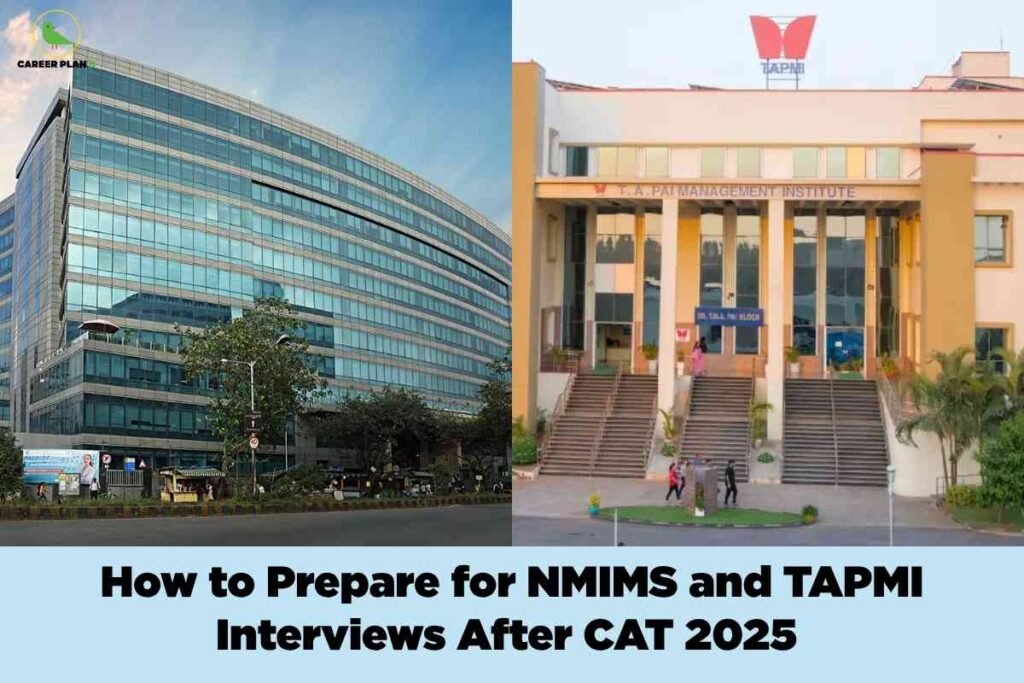
Introduction
CAT 2025 results are finally out — months of hard work, sleepless nights, and mock tests have paid off. But if you think the journey ends here, think again. For aspirants targeting top private B-schools like NMIMS (Narsee Monjee Institute of Management Studies) and TAPMI (T.A. Pai Management Institute), the real challenge begins now — the interview round.
Both NMIMS and TAPMI attract thousands of bright applicants annually, and their stringent Personal Interview (PI) and Group Discussion (GD) processes filter candidates who fit their academic culture and professional ethos. What separates a converted call from a rejection is not just knowledge — it’s personality, self-awareness, and preparation strategy.
Understanding NMIMS and TAPMI’s Selection Process
Once CAT results are declared, both institutes initiate their shortlisting procedures based on overall percentile and profile suitability. Knowing how each institute assesses candidates is vital before you begin your preparation.
NMIMS Selection Breakdown
- NMIMS accepts CAT, NMAT, and XAT scores for programs like MBA and MBA HR.
- The shortlisting is followed by a Personal Interview (PI) round, where candidates are evaluated on their academics, clarity of goals, communication skills, and knowledge of current business trends.
- Major campuses include Mumbai, Bangalore, Hyderabad, and Navi Mumbai — with each focusing heavily on employability readiness.
TAPMI Selection Breakdown
- At TAPMI, academic excellence is as important as personal fit.
- The institute shortlists students through CAT, XAT, NMAT, or GMAT scores, followed by a Group Exercise (GE), Personal Interview (PI), and occasionally a Case Discussion (CD).
- Assessors focus on analytical ability, ethical thinking, and clarity of purpose.
| Parameter | NMIMS | TAPMI |
|---|---|---|
| Accepted Exams | NMAT, CAT, XAT | CAT, XAT, NMAT, GMAT |
| Key Rounds | Personal Interview | GD, PI, Case Discussion |
| Academic Weightage | Moderate | High |
| Work Experience | Preferable | Preferred but flexible |
What Makes NMIMS and TAPMI Interviews Unique?
While both institutes test communication and goals, their expectations differ in nuance.
NMIMS interviews lean toward corporate readiness. Questions revolve around self-awareness, specialization clarity, and understanding of business scenarios. You’ll often face discussions on recent industry developments or ethical dilemmas to judge decision-making skills.
TAPMI, on the other hand, focuses on managerial maturity and analytical thinking. Group exercises and case discussions assess not just what you say, but how you think and collaborate. The panel values authenticity — they prefer a balanced, grounded response over exaggerated confidence.
Example:
If asked about current affairs, NMIMS might ask, “How does the rise of AI impact HR functions?”
TAPMI might frame it as, “If your team’s jobs were affected by automation, how would you respond as a manager?”
How to Build a Strong Foundation for B-School Interviews
Strong performance in NMIMS and TAPMI interviews comes from clarity, research, and reflection. Here’s how to prepare strategically.
Step 1 – Reflect on Your CAT 2025 Journey
Begin by understanding your motivations. What drove you to pursue an MBA? What did you learn during your CAT prep journey? These reflections help build authentic answers.
Use stories from your preparation — how you balanced work and study, overcame a tough section, or dealt with failure. Panels appreciate resilience and emotional maturity.
Step 2 – Research the Institute Deeply
Every interviewer expects you to know why their institute is your top choice. Go beyond the website. Read about their flagship programs, values, recent partnerships, and placement initiatives.
For instance:
- NMIMS Mumbai emphasizes corporate engagement and student-led initiatives like Paragana.
- TAPMI emphasizes experiential learning through simulation labs and Bloomberg terminals.
Prepare for questions like:
- “Why do you want to join NMIMS over other B-schools?”
- “What do TAPMI’s core values mean to you personally?”
Step 3 – Know Your Profile in Depth
Be thoroughly familiar with what your resume says. Interviewers will test your understanding of your academic specialization, projects, and internships.
If you have gaps in academics or work experience, don’t be defensive. Instead, use those experiences to show growth or resilience.
Common Interview Themes and Sample Questions
NMIMS and TAPMI interviewers cover diverse aspects ranging from your academic competencies to your worldview. Here are the key themes they focus on:
- Academic & Conceptual Questions
Revisit core subjects from graduation. For example:
- From engineering: basic circuit theory, algorithms, or production management.
- From commerce: accounting principles, balance sheets, ratio analysis.
- Work Experience and Internship Questions
If you’ve worked, expect questions like:
- “Tell us about a challenge you faced at work.”
- “What key skills did you develop that will help you as a manager?”
- Current Affairs and Business Awareness
Stay updated with Budget 2025, government policies, and Indian startup cases. Questions could include:
- “What’s your view on India’s digital public infrastructure model?”
- “Name one Indian company that reflects successful innovation.”
- Personality and Motivation
Prepare answers around:
- “Tell us about yourself.”
- “What are your short-term and long-term goals?”
- “Describe a failure and what you learned from it.”
Tip: NMIMS looks for clarity in answers; TAPMI looks for thought depth. Always anchor your responses in real experiences.
Advanced GDPI Preparation Strategies
For NMIMS Personal Interview
- Polish your communication: Practice crisp and confident answers through mock PIs.
- Update industry knowledge: Be aware of trends relevant to your chosen specialization.
- Balance humility with confidence: Don’t fake answers — sincerity wins over bravado.
For TAPMI Discussions and Cases
- Structure your thoughts: In GDs, start analytically, support points with facts, and summarize logically.
- Participate wisely: Contribute meaningfully rather than speaking frequently.
- Exhibit teamwork: TAPMI panels assess listening and collaboration more than dominance.
Example Practice Task: Pick a trending topic — say “Remote Work Sustainability” — and practice presenting balanced arguments with contextual examples.
Expert Tips to Stand Out
- Customize every answer. Avoid boilerplate responses like “I want to be a manager.” Instead, link your personal experiences to your MBA motivation.
- Demonstrate learning agility. Mention how CAT prep taught you discipline or data analysis improved your decision-making.
- Show Emotional Intelligence. Handle curveball questions with composure and self-awareness.
- Engage, don’t interview. Treat it as a conversation, maintaining steady eye contact and a natural tone.
- Record mock interviews. Analyzing your body language is the best mirror for improvement.
- Peer Practice Matters. Form small groups with fellow aspirants and simulate panel drills weekly until results day.
How Career Plan B Supports Every Step
- Personalized Counseling: In-depth one-on-one counseling to align specialization, college choices, and career goals.
- Timeline & Reminder Service: Never miss a deadline—receive timely reminders and updates about institute-wise counseling calendars.
- Document Checklist & Verification: Guidance to prepare all required documentation, reducing stress on D-day.
- Preference Analysis: Analysis of seat trends, cut-offs, and college quality to build a winning choice list.
- Mock Counseling & Strategy: Practice sessions to simulate real counseling—boosting your confidence, reducing errors.
- Support for Appeals/Technical Issues: Help in resolving portal issues, appeals, or queries with admission authorities.
Have any doubts?
📞 Contact our expert counsellor today and get all your questions answered!
FAQs on NMIMS and TAPMI Interview Preparation
- When do NMIMS and TAPMI interviews usually start?
Typically, between February and March, soon after shortlists are declared post-CAT results. - Can I prepare for multiple B-school interviews together?
Yes, but focus on each institute’s distinct values. NMIMS prizes corporate readiness; TAPMI highlights ethical leadership. - What kind of current affairs questions are asked?
Most revolve around Indian business, governance, and global economic issues — Budget 2025, trade regulations, digital economy, etc. - Is work experience mandatory for either?
No, though both prefer candidates who can reflect on practical experience. Freshers can leverage academic projects or social activities as examples. - How can non-engineers perform better in technical questions?
Stay confident and focus on analytical reasoning, awareness of your domain, and communication skills — not technical depth.
Conclusion
Cracking NMIMS and TAPMI interviews after CAT 2025 demands more than academic brilliance. It’s about aligning your story, showcasing personality, and demonstrating readiness for the management world. The key takeaway?
Start early. Reflect on your journey, research the institutes, and simulate real interview situations well ahead of time.
Remember — every answer you give reflects who you are, not just what you know. Use this opportunity to convert your CAT performance into an MBA admission success story.
And if you need guided mentorship, Career Plan B is here to help you transition smoothly from CAT aspirant to campus-ready professional.