Likhith · November 25, 2025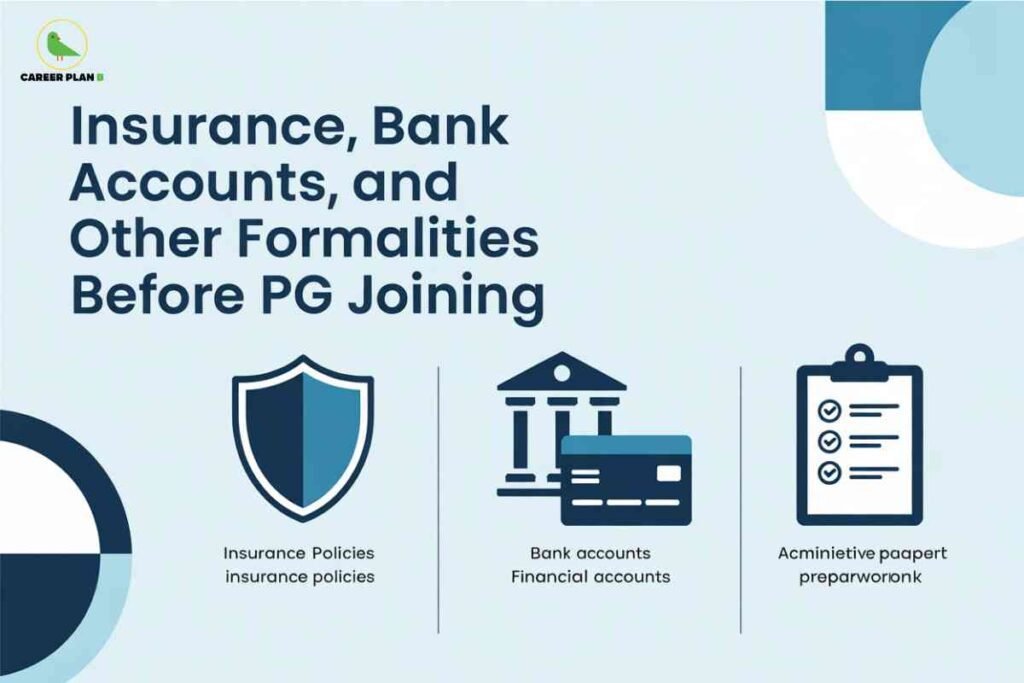
Introduction
Starting your postgraduate (PG) journey is an exciting milestone that comes with new opportunities, challenges, and responsibilities. While most students focus only on academics or relocation, the real transition requires something equally important—handling formalities such as health insurance, bank accounts, ID verifications, and documentation.
Did you know? According to surveys, over 65% of students face last-minute stress because they delay completing financial and administrative formalities before joining colleges. Missing these steps could affect everything from stipend disbursement to access to healthcare during emergencies.
This blog will walk you through the essential formalities before joining your PG program, covering insurance, banking, documentation, and small but crucial details that can make your transition stress-free.
Why Are Formalities So Important Before PG?
You may ask, “Can’t I just deal with these once I start classes?” Technically yes—but putting them off until later can cause unnecessary hurdles.
- Stipends or scholarships may get delayed without a functional bank account.
- Medical emergencies can be difficult to handle without proper health insurance.
- Missing identity or registration documents could lead to administrative issues.
Think of these formalities as the foundation of your PG journey—they give you peace of mind, financial security, and complete focus on academics.
Health Insurance: Your Safety Net
Healthcare expenses can be unpredictable, and for PG students, managing sudden costs can be overwhelming.
Why Do You Need Insurance?
- Most colleges and hostels mandate insurance for enrolled students.
- Emergencies such as accidents or sudden illness during the course require immediate coverage.
- Insurance plans often include cashless hospitalization near campus networks.
Types of Insurance to Consider
- Health Insurance: Covers hospitalization, surgery, and medication expenses.
- Accident Insurance: Provides financial assistance in case of accidents or injuries.
- Life Insurance (Optional): Some students take term insurance for long-term security.
Practical Tip
Check if your university already provides group health insurance. If not, get coverage independently. For example, many students open policies right before relocation to ensure immediate coverage on arrival.
Opening a Bank Account Before PG
Your stipend, scholarship, or salary (for residency-type PGs) will often be linked with your bank account. Without one, payments can get delayed by weeks.
Which Type of Account Should You Choose?
- Savings Account: Ideal for regular student-level transactions.
- Salary Account: If your PG program provides stipend payments via a partner bank.
- Digital-Friendly Banks: Allow easy UPI transactions, bill payments, and online transfers.
Documents You’ll Typically Need
- Admission letter/offer letter
- Valid ID proof (Aadhaar, Passport, or Voter ID)
- Address proof (utility bill, rental agreement, hostel proof)
- Passport-size photographs
Real Example
Many students face stipend delays because they wait to open the account until after joining. In one case, a PG medical resident in Karnataka had to wait three months for stipend disbursement due to incomplete bank formalities.
Other Essential Formalities Before PG Joining
Identity and Registration Documents
- Aadhaar card with updated address (helpful for banking and hostel allotment).
- PAN card (mandatory for higher-value transactions and stipend credits).
- University registration forms and migration certificates.
Accommodation and Hostel Agreements
- Verify hostel admission process in advance.
- Have soft copies and paper copies of your fee receipts and allotment letters.
Emergency Contacts and Nominee Setup
- Always provide emergency contacts to your institution.
- Add nominees for your bank accounts and insurance policies.
Digital Preparation
- Enable internet banking, UPI, and mobile banking before relocation.
- Keep soft copies of important documents stored securely on cloud platforms like Google Drive.
Vaccinations and Medical Records
Some institutions require basic immunization records (especially in medical PG courses). Carry your vaccination card and a recent health checkup if applicable.
How Career Plan B Supports Every Step
- Personalized Counseling: In-depth one-on-one counseling to align specialization, college choices, and career goals.
- Timeline & Reminder Service: Never miss a deadline—receive timely reminders and updates about institute-wise counseling calendars.
- Document Checklist & Verification: Guidance to prepare all required documentation, reducing stress on D-day.
- Preference Analysis: Analysis of seat trends, cut-offs, and college quality to build a winning choice list.
- Mock Counseling & Strategy: Practice sessions to simulate real counseling—boosting your confidence, reducing errors.
- Support for Appeals/Technical Issues: Help in resolving portal issues, appeals, or queries with admission authorities.
With over 15 years of trusted experience, Career Plan B is your not-for-profit partner—focused only on your best possible outcome, not commissions or preferences.
Have any doubts?
📞 Contact our expert counsellor today and get all your questions answered!
FAQ Section
1. Do I really need health insurance if I’m healthy?
Yes, because emergencies are unpredictable. Insurance ensures you are financially secure without depending solely on parents or loans.
2. Can I open a student bank account after joining PG?
Yes, but stipend disbursement or scholarships may get delayed. Opening it beforehand ensures a smooth start.
3. Is PAN card mandatory for PG students?
Yes, especially for financial transactions, stipends, and exam applications. It’s better to have it updated before joining.
4. What if my Aadhaar card has the wrong address?
Update it before joining, as most institutions use it for verification and banking documentation.
5. Should international students follow the same formalities?
Yes, along with mandatory passport, visa, and FRRO registration requirements in India.
Conclusion
Your PG journey should be about growth, research, and learning—not paperwork stress. By completing your insurance, bank accounts, and key documentation formalities ahead of time, you set yourself up for a smooth and confident academic transition.
Think of it as laying the foundation of a house: when the base is strong, everything else feels secure and effortless.
So, get your checklist ready today—because once classes and rotations begin, you’ll thank yourself for being prepared.