Likhith · November 1, 2025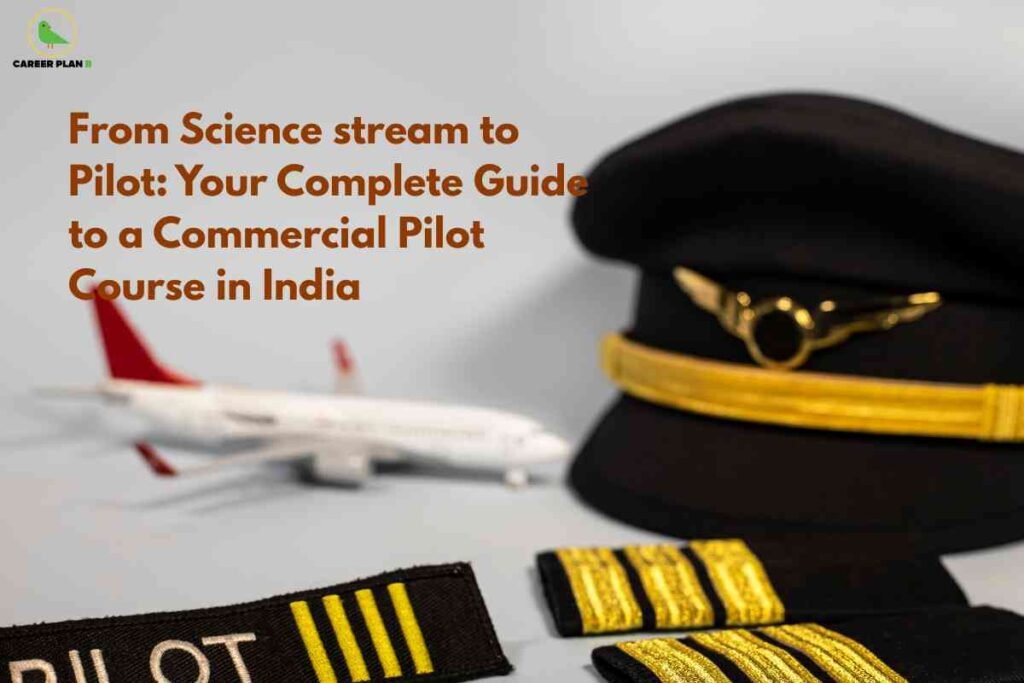
Introduction
Imagine soaring through the skies, commanding powerful aircraft, and exploring the world from above. For students with a background in Physics and Mathematics, this dream is well within reach. But how exactly do you convert this dream into reality? The path to becoming a commercial pilot in India is exciting yet demanding, filled with specific criteria, rigorous training, and crucial licensing procedures.
This complete guide will walk you through the eligibility, courses, selection process, training journey, licensing details, career prospects, and the real costs involved. If flying is your passion, consider this your runway to a career in aviation.
What is a Commercial Pilot?
A commercial pilot is a professional aviator licensed to fly aircraft for compensation or hire. Unlike private pilots who fly for personal reasons, commercial pilots operate passenger flights, cargo deliveries, or charter services.
To operate commercially, one must hold a Commercial Pilot License (CPL), a certification from the DGCA that proves their readiness to handle complex flight operations responsibly.
Eligibility Criteria: The Starting Point
If you have completed your 12th with Physics and Mathematics, you are eligible to start pilot training. Chemistry is not a mandatory subject.
Here are the key requirements:
- Minimum Age: You must be at least 18 years old for the issuance of a CPL, though you can begin training earlier.
- Educational Qualification: A pass in 12th grade with Physics and Mathematics from a recognized board is essential.
- Medical Fitness: Candidates must clear a Class II medical test to begin training, followed by a stringent Class I medical examination to obtain a CPL. This confirms excellent eyesight, cardiovascular health, and overall fitness as per DGCA standards.
How to Choose the Right Commercial Pilot Course
Choosing the right flight school is the most critical decision in your journey. You can opt for government aviation academies or private flying schools, but they must be approved by the Directorate General of Civil Aviation (DGCA).
Consider these factors when choosing:
- DGCA Approval: This is non-negotiable and ensures the training meets regulatory standards.
- Course Duration: Training typically takes 18 months to 3 years, depending on whether it’s an integrated or modular program and the school’s efficiency.
- Infrastructure & Reputation: Check the school’s faculty experience, aircraft fleet size, simulator facilities, and placement assistance records.
Leading institutes include the government-run Indira Gandhi Rashtriya Uran Akademi (IGRUA) and reputable private schools across the country.
Entrance Exams and Selection Process
Gaining admission to a top flying school involves clearing a few hurdles:
- Written Exam: Tests your knowledge of 10+2 level Physics, Mathematics, and English.
- Aptitude Test: Many schools use pilot aptitude tests (like COMPASS) to assess psychomotor skills and multitasking abilities.
- Personal Interview: This assesses your communication skills, motivation, and suitability for a career in aviation.
Note that there is no single, nationwide entrance exam. Premier institutes like IGRUA conduct their own entrance exams, while private schools have their own distinct selection processes.
The Training Journey: From Ground School to 200 Flying Hours
Your training is divided into two main phases:
- Ground School: This is the theoretical foundation. You’ll study crucial subjects like Aircraft Systems, Meteorology, Air Navigation, and Air Regulations to clear the DGCA’s theoretical exams.
- Flight Training: This is the hands-on part. You will learn to fly in actual aircraft and simulators, guided by a certified flight instructor. The journey includes your first solo flight, cross-country flying, and mastering flight maneuvers.
To earn a CPL, you must log a minimum of 200 flying hours as stipulated by the DGCA.
The Final Steps: Type Rating and Licensing
After completing your training and clearing all DGCA exams, you receive your Commercial Pilot License (CPL). However, to fly a specific commercial airliner like an Airbus A320 or a Boeing 737, you need one more crucial certification.
- What is a Type Rating?
A Type Rating is a specialized qualification that certifies a pilot to fly a particular type of aircraft. Airlines require pilots to have a type rating for the aircraft they operate. This is an intensive training program that costs extra and is done after obtaining your CPL.
Career Scope and Salary in India’s Aviation Sector
With massive aircraft orders from Indian airlines, the career outlook for pilots is excellent.
- Job Opportunities: You can work with domestic and international airlines, cargo carriers, charter companies, or corporate flight departments.
- Salary: The financial rewards are significant but come after you are fully qualified. After obtaining a CPL and a Type Rating, an entry-level Junior First Officer at a major Indian airline can expect a starting salary between ₹18 lakh to ₹30 lakh per annum (₹1.5 lakh to ₹2.5 lakh per month).
How Much Does It Really Cost to Become a Pilot?
Becoming a pilot is a capital-intensive goal. It’s crucial to understand the complete financial picture.
- CPL Training Cost: The cost for the CPL program (200 hours of flying) generally ranges from ₹35 lakh to ₹50 lakh.
- Type Rating Cost: The mandatory Type Rating on an aircraft like an A320 costs an additional ₹20 lakh to ₹30 lakh.
Therefore, the total realistic cost to become an airline-ready pilot in India is between ₹60 lakh to ₹80 lakh. Financial planning is crucial, and some banks offer student loans for pilot training.
Career Plan B – Your Backup for Success
At Career Plan B, our mission is simple: Right to Quality Education and Career, hence Quality Life!
With over 16 years of expertise, we provide:
- One-on-One Counselling Support – Personalized guidance for your career path.
- Career Roadmaps – Clear strategies based on your interests and strengths.
- Backup Strategies – Alternative options so you never miss opportunities.
Book a free counselling session today with Career Plan B
Frequently Asked Questions (FAQs)
- Can I become a pilot if I didn’t have Chemistry in 12th grade?
Yes, absolutely. The mandatory subjects are only Physics and Mathematics. Chemistry is not required.
- How long does it take to become an airline pilot?
Including the CPL and Type Rating, the entire process usually takes about 2 to 3 years.
- Is the Type Rating included in the CPL course fees?
No. Type Rating is a separate, advanced certification that you must pay for after completing your CPL training.
- What medical fitness standards are required?
You must be able to pass a DGCA Class I medical examination, which has strict standards for vision (can be correctable with glasses), cardiovascular health, and overall physical fitness.
- Do I need a Private Pilot License (PPL) before starting CPL?
No. Most courses in India are “integrated CPL” programs, which take you from zero flying experience directly to a CPL. A PPL is a milestone within this integrated training.
Conclusion
The journey from a 12th-grade student with Physics and Maths to a commercial pilot is challenging but immensely rewarding. It demands careful planning, financial preparedness, and unwavering dedication. With India’s aviation industry poised for massive growth, there has never been a better time to pursue your dream of flying.
If this journey excites you, prepare well, stay focused, and let Career Plan B guide you through every step toward the skies. Your aviation dreams are well within reach with the right roadmap and determination.